
You spot a listing for a Chanel flap bag at half the retail price, or a friend hands you a Louis Vuitton she picked up secondhand and asks you point blank if it’s real. Either way, you’re suddenly doing math you never trained for, reading stitching, guessing at hardware weight, trying to remember what a real logo font looks like. I’ve been the person squinting at a bag in someone’s living room during a local marketplace meet, feeling a little ridiculous, and I’ve also been the person who got it wrong the first time.
Learning how to spot a fake designer bag is less about memorizing brand trivia and more about training your hands and eyes to notice the same handful of things, no matter whose name is stamped inside. Some people call this learning to identify counterfeit designer bags, others call it spotting a fake luxury handbag. It’s the same checklist either way, and it works whether you’re eyeing a Chanel, a Prada, or something with a logo you’ve never seen before. Here are the six checks I actually run, in the order I run them, and why I’ve stopped trusting the ones everyone else leads with.
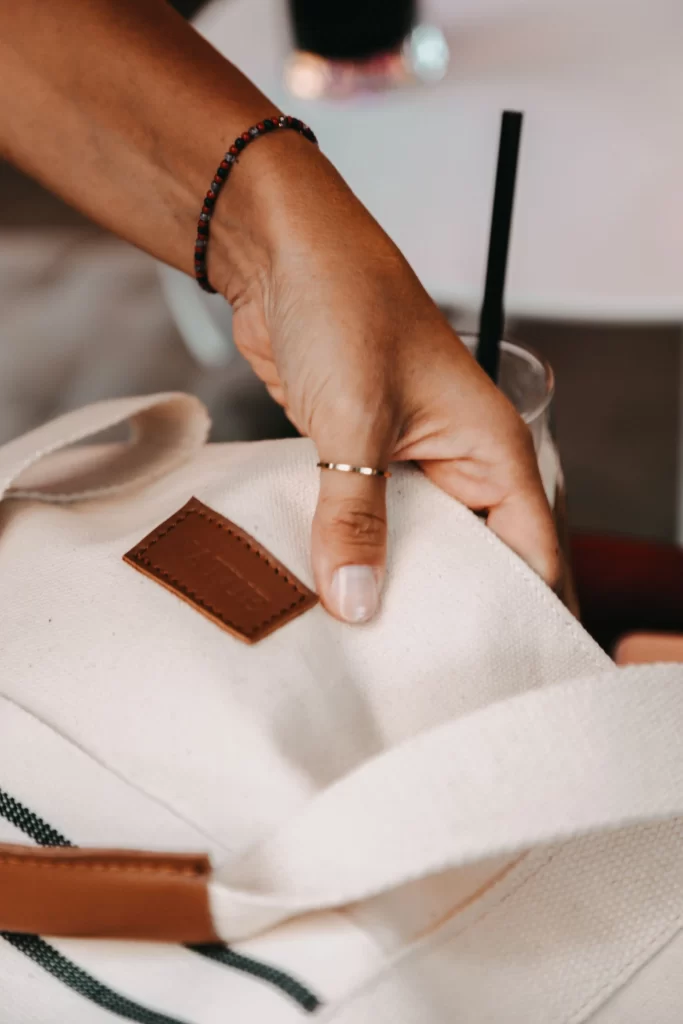
Why I Check These in This Order (Not the Order Most Guides Use)
Most guides lead with serial numbers, authentication cards, and packaging, since those are the flashiest, most official looking pieces of evidence. I check them last. They’re also the easiest thing for a counterfeiter to reproduce convincingly, since a card is just print and paper, while a machine has to actually replicate stitching tension and hardware weight to fool you. I run the harder to fake, physical checks first, and treat the paperwork as confirmation, not proof.
I learned this the slow way. A few years into buying pre owned pieces, I gave a bag a pass because the hardware felt heavy and the stitching looked tight in photos. It wasn’t until I lined up the interior tag against photos from the brand’s own site a week later that I noticed the letter spacing was very slightly off, close enough to fool a fast glance, wrong enough to matter once I actually looked. Nothing about the packaging or the card had tipped me off. The construction did, once I bothered to check it properly.
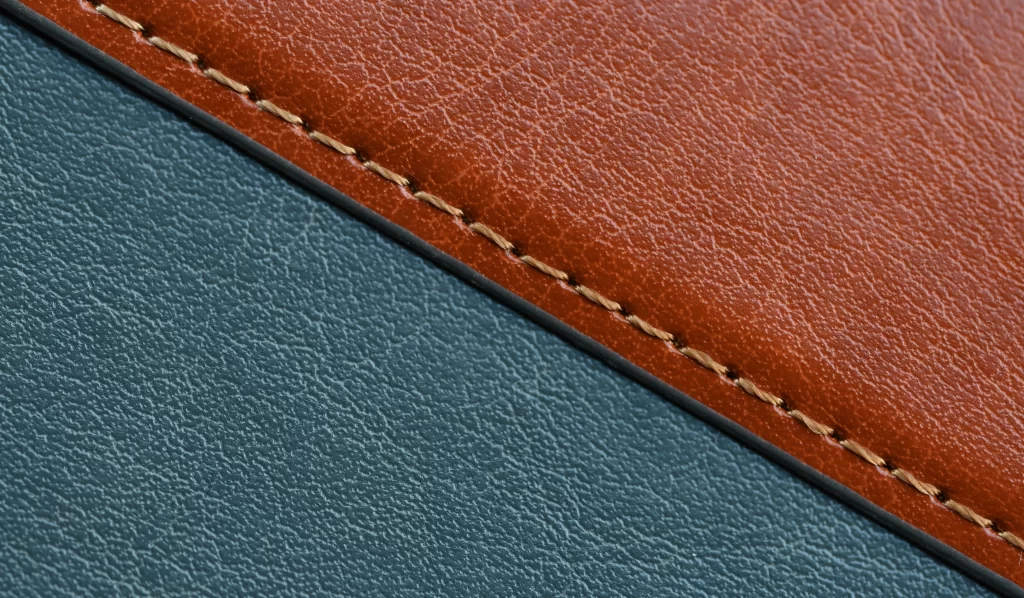
1. Stitching: Even Tension Is Harder to Fake Than It Looks
Real stitching sits flush, runs at a consistent length, and holds tension evenly across a seam. Get close and look at where two panels meet, especially around handles and corners. A skipped stitch, an obviously glued edge on the interior, or thread that puckers where it pulls too tight are the tells that show up first, even on decent counterfeits.
Run a finger along a seam before you look at it. Genuine stitching feels smooth under a fingertip. A rushed reproduction often has thread that catches slightly, or a texture that changes halfway down a seam because two different machines, or two different workers, finished it. Stitch count is a smaller detail worth knowing too. Several fashion houses hold themselves to a specific number of stitches per inch on key seams, tighter than what most counterfeit operations bother matching, since matching it slows production down and eats into their margin.
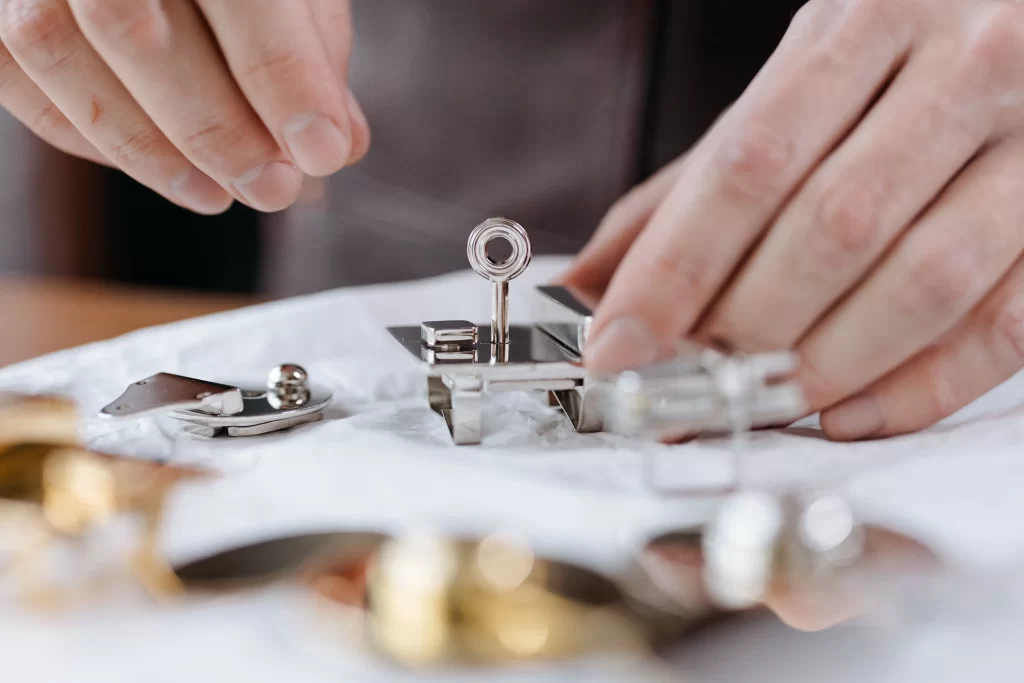
2. Hardware: Weight, Engraving Depth, and How It Wears
Pick up the bag and pay attention to the zipper pulls, clasps, and any buckles. Genuine hardware has a certain weight to it, a small resistance when you press a clasp that feels solid rather than hollow. Engraved logos on real hardware sit deep and sharp, since the mark is pressed or cut into the metal rather than a thin plate stamped on top.
Fakes tend to go one of two ways: hardware that feels suspiciously light, or hardware that’s shinier than it should be, because a cheaper finish reflects more light than a properly treated one does. Check zipper pulls specifically. Many brands work with a small handful of known hardware manufacturers, and a generic, unbranded zipper on a bag that should carry a named one is worth a second look, even though a branded zipper by itself doesn’t guarantee anything. Wear tells you something too. Real hardware ages by dulling evenly. Cheap plating tends to flake or rub through in patches, revealing a different colored metal underneath within months of regular use.
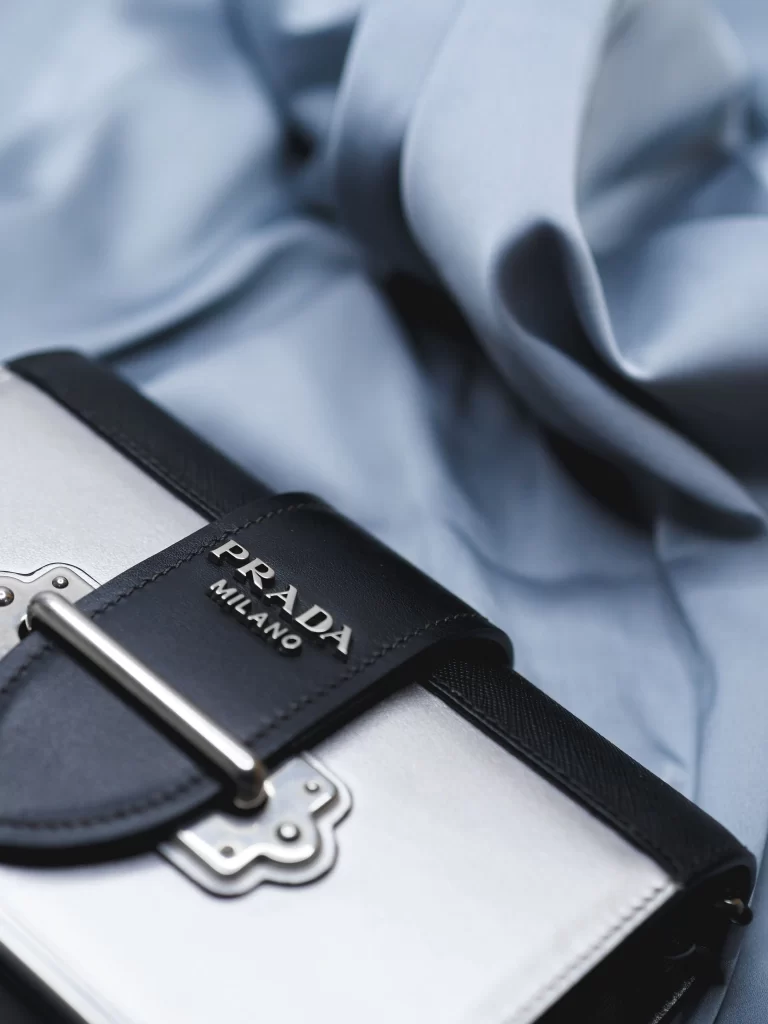
3. Logo, Font, and Proportions: Get a Reference Photo Open
Pull up a current photo straight from the brand’s own site, or a listing you know is authentic, and hold your bag next to it, even on a phone screen. Font weight, letter spacing, and the exact angle of a monogram are all things counterfeiters approximate rather than copy exactly, since most don’t have the original type files to work from.
Look specifically at where a logo or pattern crosses a seam. On an authentic piece, it lines up cleanly across panels. On a counterfeit, you’ll sometimes catch the pattern jumping or repeating awkwardly right at a seam, because matching a print across cut fabric pieces is expensive to get right and easy to skip. Spacing between letters is one of the more reliable tells precisely because it’s boring. Nobody notices it unless they’re looking for it, which means counterfeiters rarely bother perfecting it.
4. Materials and Interior: What the Bag Smells and Feels Like
Real leather has a specific smell, warm and a little earthy, and it should feel supple rather than stiff or plastic under your fingers. Coated canvas, the material a handful of houses use instead of leather, has its own texture and should never smell chemical or feel cold to the touch. If a bag smells like a hardware store or a new shower curtain, treat that as a real signal, not a minor detail you talk yourself out of.
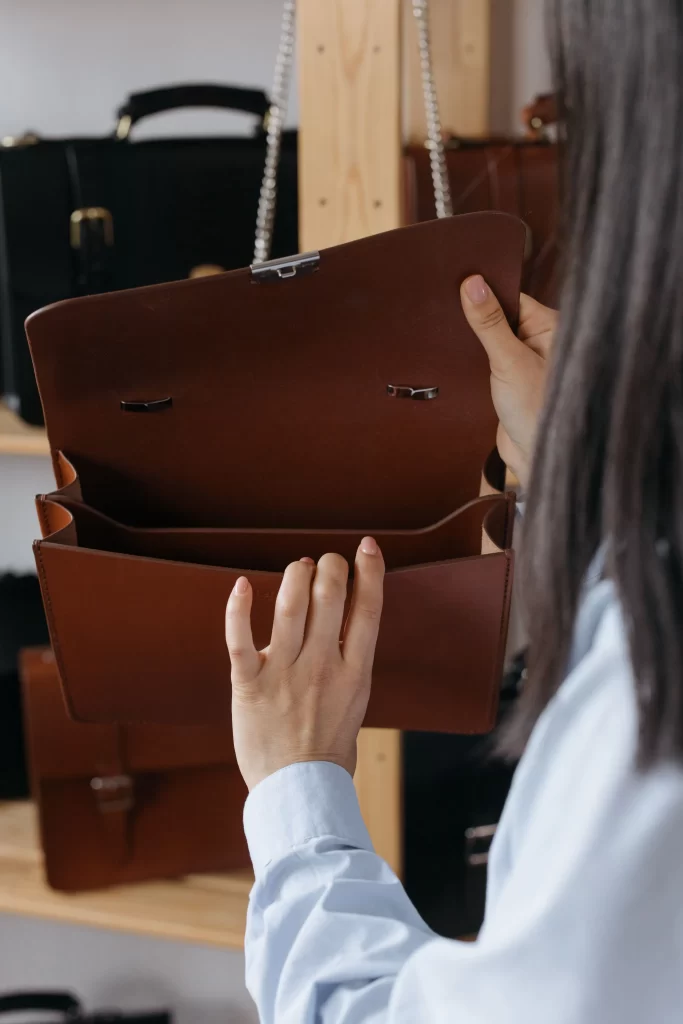
Open the bag and check the lining too. Many brands use a specific lining color or fabric as a quiet signature, and a lining that feels thin, slippery, or a shade off from what it should be is often where a decent counterfeit gets caught, since interiors get far less attention from counterfeiters than the exterior does.
5. Serial Numbers, Date Codes, and Authentication Cards: Useful, Not Definitive
This is the category most guides put first, and I put it second to last on purpose. A date code, a serial number, or an authentication card can absolutely help confirm a bag, and it’s worth checking that the format matches what that brand actually uses for the era the bag claims to be from. But none of it is hard to reproduce. A card is a piece of printed paper. A stamped number is just characters pressed into leather or metal, and a well equipped counterfeiter can match the format closely enough to fool a quick glance.
Treat these as one data point among several, not the deciding one. If everything else about a bag checks out and the date code format looks right for the brand and era, that’s a good sign. If the stitching and hardware already feel wrong, a convincing card in the box won’t fix that.
6. Packaging and the Deal Itself: What the Price Is Telling You
Dust bags, boxes, and tissue paper matter less than people think, since they’re also just paper and fabric, cheap for a counterfeiter to replicate well. What matters more is the deal surrounding the bag. A price that sits meaningfully below what that style typically resells for, a seller who won’t answer specific questions about the item’s history, or listing photos that conveniently avoid close ups of stitching and hardware are all bigger red flags than a slightly off feeling dust bag.
Trust your read on the situation as much as your read on the object. A seller with nothing to hide will usually welcome specific questions and more photos. One who gets vague or pushy when you ask for a close up of the hardware is telling you something, even if the bag itself passes every check on this list.
What These Checks Cannot Catch (And What to Do Instead)
The best counterfeits on the market today are built specifically to pass a casual inspection, and sometimes even a careful one. If you’ve run through all six checks and something still feels off, that instinct is worth listening to.
A growing number of resale platforms and independent services now use imaging technology alongside trained eyes to catch what a casual inspection can miss. Entrupy, for one, uses high resolution imaging and machine learning trained on both real and counterfeit items to flag pieces that need a closer look, and it’s worth knowing that kind of option exists for anything you’re not fully confident about after checking it yourself.
It’s also worth remembering how common this problem has actually become. Independent industry research puts the share of designer items sold that turn out to be counterfeit at roughly one in ten, and plenty of buyers have unknowingly owned a fake without ever finding out. That’s not meant to scare you off buying secondhand. It’s meant to make the case for actually running these checks instead of trusting a good photo and a confident seller.
Where to Go From Here
Everything above works across virtually any brand, which is exactly the point of running through it this way. Two things are still worth a deeper look on their own. If you’re specifically eyeing a Goyard piece, a few of these checks work differently because of the brand’s hand painted canvas and specific hardware, and I’ve broken those down separately in my complete guide to spotting a fake Goyard. And if you want the full picture on telling real leather from a very good synthetic, something that comes up on far more than just designer bags, that’s covered in a dedicated guide to real vs fake leather.
Once a bag actually checks out, the platform you buy it from matters just as much as the checks you ran to get there. I’ve laid out the resale sites I actually trust, and why, in my guide to where to buy authentic pre owned designer bags.
Frequently Asked Questions
What’s the single fastest way to spot a fake designer bag?
Feel the stitching and hardware before you look at anything else. Uneven stitching, hollow feeling hardware, or a shiny, cheap finish will disqualify a bag faster than a missing dust bag or a slightly off date code ever will.
Are serial numbers and date codes enough to prove a bag is real?
No, and treating them as the final word is a common mistake. They’re a useful confirmation once everything else checks out, but a card or a stamped number is one of the easiest things for a counterfeiter to reproduce convincingly.
Do these checks work the same way for every brand?
The framework does. The specific details, like what a lining color should look like or where a date code sits, vary by brand and sometimes by model year, so it’s worth looking up brand specific references for anything you’re seriously considering.
What should I do if I’ve checked everything and I’m still not sure?
Trust that feeling. Send detailed photos to a professional authentication service, or use an imaging based option if the seller or platform offers one. A little friction here is worth it compared to the alternative.
Can a bag pass most of these checks and still be fake?
Yes, especially with higher quality counterfeits built specifically to survive casual inspection. That’s exactly why running through more than one category of check matters more than acing any single one of them.
The Short Version
None of these checks require a magnifying glass or a certification course. They require slowing down enough to actually look, and being willing to walk away from a deal that feels rushed. The stitching, the hardware, and the way a bag is put together will tell you more than any card in the box ever will.
Bring this list with you the next time a listing catches your eye, run through it in order, and trust what your hands are telling you over what a seller is telling you. Getting good at this takes exactly one time doing it properly, and after that, you’ll never unsee the things that give a fake away.