
Introduction
I get asked constantly whether a tracksuit still belongs in a wardrobe past 40, and my answer hasn’t changed in years: yes, if you know how to wear it. This 40’s tracksuit style guide walks through eight real ways to work a tracksuit into gym days, weekend errands, travel, and even dinner out, without looking like you rolled out of bed or tried too hard. The tracksuit isn’t a teenager’s uniform anymore. It’s one of the most flexible pieces you own, once you stop treating it like a single outfit and start treating it like eight different ones.
Are Tracksuits Still In Style After 40?
Short answer: yes, and they’re arguably more acceptable now than they were a decade ago. Athleisure pulled the tracksuit out of the gym bag and put it on the street, and quality brands followed with better fabrics and cleaner cuts. The mistake people make at 40 isn’t wearing a tracksuit, it’s wearing the same one they’d have worn at 22. Fit, fabric, and how you accessorize do the heavy lifting here.
Get the Fit and Fabric Right Before You Style Anything
Everything below depends on this part. A tracksuit that’s too baggy reads as sloppy, and one that’s too tight reads as trying to prove something. I lean tailored, not boxy: a tapered jogger and a jacket that actually follows your shoulder line. If you’re unsure how a set should sit, check the crotch and inseam first, since that’s where cheap tracksuits go wrong before anything else does.
Fabric matters just as much. Shiny, thin polyester ages a look fast. Cotton blends, brushed fleece, and matte technical fabrics look current and hold their shape through repeated washes. Neutrals like navy, charcoal, and olive are the easiest entry point, but a deep burgundy or forest green set reads just as sharp without feeling like you’re trying to stand out.
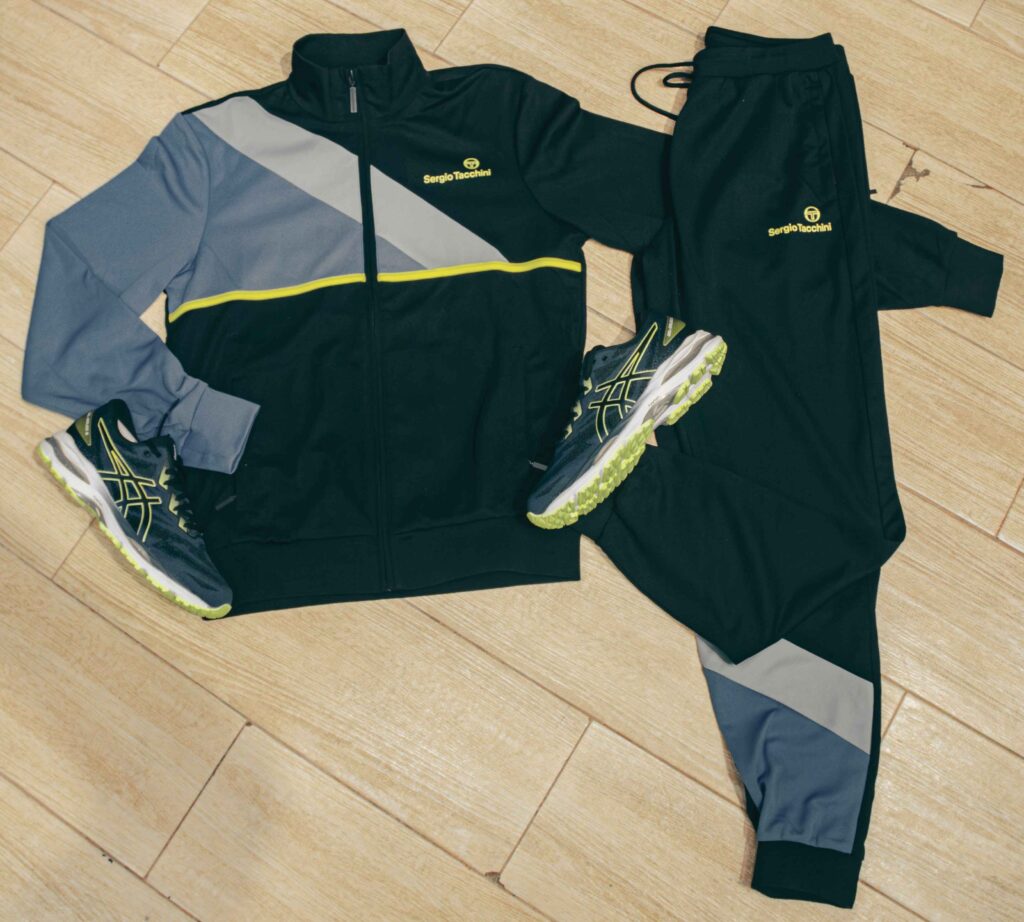
1. The Gym-Ready Set
This is the tracksuit doing its original job, just with better materials than 20 years ago. A tapered jogger with an adjustable waistband, paired with a zip jacket in a breathable stretch fabric, handles a gym session or a brisk walk without restricting movement. Cropped jackets with high-waisted joggers work well on women here, while tapered pants that skim the leg without clinging tend to suit men best. Stick with performance sneakers and a simple sports watch, and skip anything that looks like it belongs on a runway instead of a treadmill.
2. The Errand-Day Layer
For coffee runs, school pickups, or a quick grocery trip, I like breaking up the monotony of a matching set with an unexpected outer layer. Throw a bomber jacket or a structured wool coat over your tracksuit and the whole look stops reading as loungewear. It’s a five-second styling trick that changes the entire impression.
3. The Travel-Day Uniform
Airports reward comfort, but comfort doesn’t have to mean sloppy. Relaxed track pants, a plain hoodie, and slip-on trainers get you through security fast and keep you comfortable for hours in a seat. Add a lightweight scarf or an oversized tote if you want the look to read a little more put-together at baggage claim.
4. The Broken-Up Smart Casual Look
One of my favorite ways to wear a tracksuit in my 40s is to never wear the full set at once. Use just the jacket, layered over chinos or dark denim, and you get a polished, sporty-but-intentional outfit. For women, pairing a fitted track jacket with a midi skirt and clean sneakers does the same job. This approach also happens to be one of the easiest ways to style joggers or a track jacket you already own without buying anything new.
5. The Monochrome Elevated Set
A single-color tracksuit, all one shade from collar to ankle, looks more expensive than it usually is. Charcoal, tan, or a deep green in one consistent tone reads as intentional rather than accidental. Keep accessories minimal here: a slim watch, one bag, done. Anything more competes with the outfit instead of supporting it.
6. The Streetwear-Suit Swap
There’s a real overlap between tracksuits and tailoring right now, and it’s worth borrowing from. Wearing a tracksuit as separates first, rather than the full matching set, is a trick menswear editors have pointed to for a while, and it works particularly well if you want a look that nods to retro tracksuit styling without looking like you raided a teenager’s closet. Pair a solid track jacket with tailored trousers instead of the matching pants, and you get something closer to a suit silhouette with sportswear comfort.

7. The Weekend Coffee-Run Look
This is the tracksuit at its most relaxed, and honestly the easiest of the eight to get right. A coordinated set in a neutral tone, white leather sneakers, and a crossbody bag is enough. I’ll add a baseball cap if I haven’t washed my hair, and nobody has ever once noticed. This is also the outfit where building a broader capsule wardrobe over 40 pays off, since a tracksuit slots easily into a closet full of pieces that already work together.
8. The Dressed-Up Dinner Look
Skip the gym trainers entirely for this one. Swap them for minimalist leather sneakers, loafers, or ankle boots, and layer the track jacket over a crisp tee or dark jeans. A slim belt and a structured bag finish it off. This is the version that surprises people, because it doesn’t look like a tracksuit at first glance, it looks like an outfit that happens to include one.
Common Style Mistakes to Avoid After 40
Going oversized is the biggest one I see. Comfort and structure aren’t opposites, and a set that’s two sizes too big just looks unfinished rather than relaxed. Heavy branding is the second mistake. A loud logo across the chest can read as trying too hard once you’re past your 20s, so I steer toward subtle logo placement or unbranded pieces instead. And don’t skip on quality. Cheap fabric loses its shape within a few washes, and a sagging waistband or faded color ages an outfit faster than the cut ever will. A well-made tracksuit costs more upfront but holds its structure for years, which actually makes it the better value over time.
Frequently Asked Questions
Are tracksuits still in style?
Yes. Athleisure has kept tracksuits relevant well beyond gym use, and better fabrics and tailored cuts have made them acceptable for errands, travel, and casual outings at any age.
How should a tracksuit fit?
Look for a tapered, not baggy, silhouette. The jacket should follow your shoulder line, and the pants shouldn’t pool at the ankle or pull tight across the thigh.
What’s the difference between a tracksuit and a jogging suit?
The terms are often used interchangeably, but a tracksuit traditionally refers to a matching jacket-and-pant set built for sport, while “jogging suit” more loosely covers any coordinated sweat-fabric set, matching or not.
How much should a good tracksuit cost?
Quality cotton or technical-blend sets typically start around $60 to $100, with premium brands running higher. Cheaper sets under $40 tend to lose shape after a handful of washes.
Can you wear a tracksuit as separates instead of the full set?
Yes, and it’s often the more versatile choice. Wearing the jacket with jeans or chinos, or the pants with a plain tee, stretches one set into several different outfits.
Conclusion
A tracksuit at 40 isn’t about chasing a trend, it’s about knowing which version of it fits the day you’re having. Whether that’s a gym set, a broken-up smart-casual outfit, or a monochrome look dressed up for dinner, the same rules carry through: fit first, quality fabric, and accessories that stay minimal. Once you’ve got a couple of these eight looks down, the tracksuit stops being a fallback outfit and starts being one of the more reliable pieces in your closet.