
Most people do one of two things with skincare: they either overdo it with twelve steps and a bathroom shelf that looks like a chemistry lab, or they splash water on their face and call it done. Both extremes miss the point entirely.
A solid morning and night skincare routine doesn’t need to be complicated. But it does need to be intentional — because your skin has completely different needs at 8am than it does at 8pm. Once you understand why that is, the whole thing clicks into place.
Here’s your complete AM to PM guide: what to use, in what order, and exactly why it matters.
Why Your Morning and Night Routines Should Never Be the Same
Your skin operates on a 24-hour cycle. During the day, it’s in defense mode — battling UV rays, pollution, and environmental stress. At night, it flips into repair mode. Cell turnover accelerates. The skin barrier becomes more permeable. Your skin is literally more receptive to active ingredients while you sleep.
So using the same products morning and night isn’t just redundant — it’s working against your skin’s natural rhythm. SPF at night does nothing. Retinol in the morning can make your skin photosensitive. Heavy repair creams during the day sit under your makeup like wet cement.
The 8-step framework below is split into 4 AM steps and 4 PM steps — enough to cover all the bases without drowning you in products.
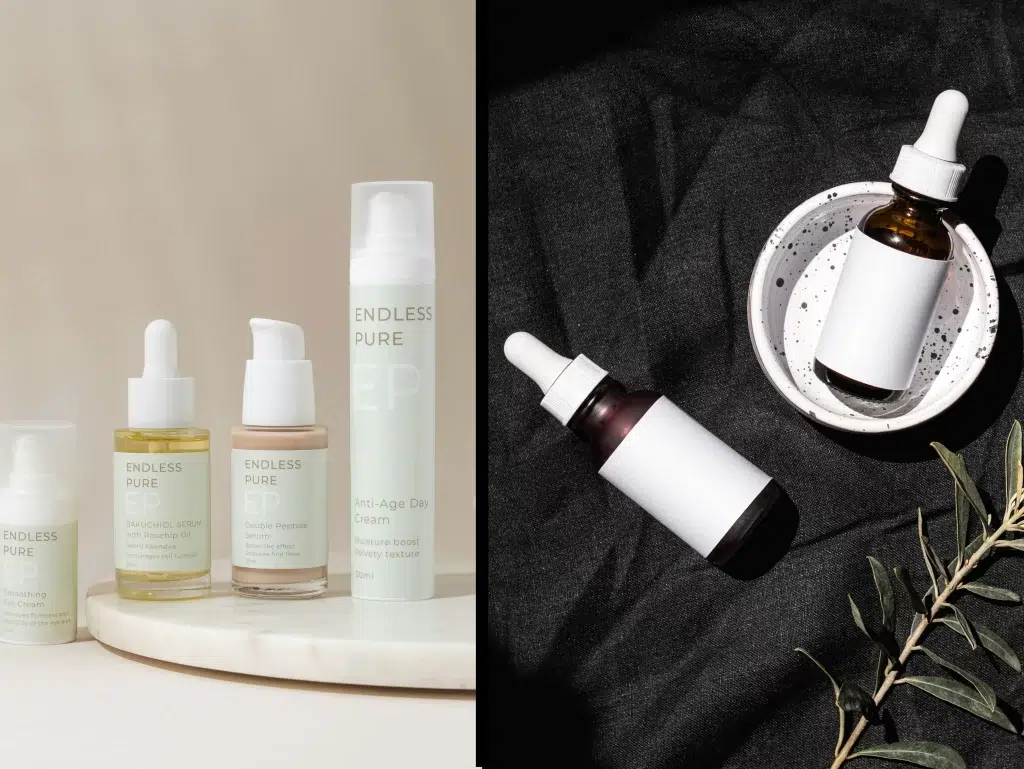
Your 4-Step Morning Skincare Routine (The AM Build)
Think of your morning routine as putting on armor. Every step either hydrates, protects, or preps your skin to face the day. Nothing here should feel heavy. Nothing should slow you down.
Step 1: Cleanse (Gently)
Your skin isn’t dirty when you wake up. But it’s accumulated a night’s worth of sweat, sebum, and any residue from your PM products. A rinse with a gentle, low-pH cleanser — not your evening formula — is all you need.
If you have dry or sensitive skin, you can honestly skip cleanser entirely in the morning and just rinse with cool water. Your skin barrier will thank you for it. Save the actives for evening.
For oily or combination skin, a gel or foam cleanser with salicylic acid works well here without being too stripping.
The rule: cleanse to refresh, not to strip.
Step 2: Vitamin C Serum (or Your AM Treatment)
This is the step most people skip — and it’s the one that makes the biggest visible difference over time.
A Vitamin C serum applied in the morning works synergistically with your SPF. It boosts photoprotection, neutralizes free radicals from UV and pollution, and gradually fades dark spots and uneven tone. It’s not a quick fix. But six to eight weeks in, people start asking what you’re doing differently.
Apply two to three drops to your fingertips and press (don’t rub) into your face and neck. Wait 30 seconds before the next step — Vitamin C needs a moment to absorb properly.
If Vitamin C irritates you, niacinamide is an excellent alternative: calming, pore-minimizing, and plays well with almost everything.
Step 3: Moisturizer
Yes, even if you have oily skin. Skipping moisturizer to “control” oil is one of the most common skincare mistakes out there — your skin compensates by producing more oil when it’s dehydrated.
Choose based on your skin type: gel formulas for oily/combination, creams for dry, and anything labeled “barrier repair” if you’re sensitive. Look for ceramides, hyaluronic acid, or squalane in the ingredients list — these are the workhorses of healthy hydration.
Apply while your skin is still slightly damp from the serum step. It seals in moisture better that way.
Step 4: Sunscreen (Non-Negotiable)
Sunscreen is the single most effective anti-aging product ever made. Not retinol. Not Vitamin C. SPF. And yet it’s the step most people apply too little of, too infrequently, or skip entirely on cloudy days.
UV rays penetrate glass. They reach you while you’re driving, sitting by a window, or having lunch outside. Even incidental exposure, five minutes here and ten minutes there, adds up over years into the kind of damage that shows up as hyperpigmentation, fine lines, and texture changes in your 30s and 40s.
Use broad-spectrum SPF 30 at minimum. SPF 50 if you’re outdoors. Apply it last, as the final layer in your morning routine — nothing goes on top of sunscreen. And yes, you do need to reapply every two hours if you’re spending time in the sun.

Your 4-Step Night Skincare Routine (The PM Repair)
Your evening routine is where the real work happens. Skin is in full repair mode once the sun goes down — more permeable, more receptive to actives, and actively regenerating. Take advantage of that window.
Step 5: Double Cleanse (Remove Everything First)
If you wore SPF today — and you did, right? — a single rinse with your regular cleanser isn’t enough. Sunscreen and oil-based debris bond to skin in a way that water-based cleansers don’t fully dissolve.
Start with an oil-based cleanser or micellar water to break down SPF, makeup, and excess sebum. Follow with your regular water-based cleanser to remove what the first step loosened. This two-step process, called double cleansing, is the reason some people’s serums “stopped working” — they were applying actives on top of a barrier of leftover SPF residue.
If you skipped SPF and makeup today, one thorough cleanse is fine.
Step 6: Toner or Essence (Optional but Effective)
Toners have a bad reputation from the era of alcohol-heavy astringents that left skin tight and stinging. Modern toners are nothing like that.
A good hydrating toner or essence — think ingredients like glycerin, panthenol, or centella asiatica — preps your skin to absorb the serum that comes next. Think of it as pre-hydration: you’re opening the door so the next steps can walk straight in.
If you have sensitive or dry skin, this step is genuinely worth adding. If you’re more of a minimalist, it’s the one you can skip without the routine falling apart.
Step 7: Treatment Serum + Eye Cream (Your PM Actives)
Night is when you bring in the heavy hitters. Retinol, AHAs, BHAs, peptides — these ingredients perform best (and most safely) when there’s no sun exposure to trigger irritation.
Retinol is the gold standard for cell turnover, fine lines, and long-term skin texture. Start slow: twice a week, low concentration, and always follow with a rich moisturizer. Your skin will purge slightly at first. Push through it — that’s just turnover accelerating.
AHAs (glycolic, lactic acid) are brilliant for brightening and smoothing texture. Use them on nights when you’re not using retinol — not both in the same routine.
Peptides are gentler and can be used nightly without buildup. They signal the skin to produce collagen and are particularly good for anyone in their 30s and beyond who isn’t ready for retinol yet.
For eye cream: apply after your serum, using your ring finger (lightest pressure) and tapping gently along the orbital bone. Don’t drag. The skin there is thinner than anywhere else on your face.
Step 8: Night Cream or Facial Oil (Lock It All In)
Your final PM step is about sealing. Night creams are typically richer than daytime moisturizers — they contain more emollients and occlusives to lock in hydration overnight while your skin does its repair work.
If you prefer a lighter feel, a few drops of a facial oil (argan, rosehip, or squalane) pressed into the skin serves the same purpose. Oils are particularly good for dry or aging skin types.
Apply to your face and neck. The neck is one of the first areas to show aging, and it’s almost universally ignored.
Ingredient Conflicts You Need to Know About
This is the part most skincare articles either skim or skip entirely. Using the wrong ingredients together doesn’t just mean they cancel each other out — it can genuinely irritate your skin and set your progress back.
Vitamin C + Retinol: Keep these separated. Vitamin C belongs in your morning routine; retinol at night. Layering them together at the same time can cause irritation and reduces the stability of both.
AHAs/BHAs + Retinol: Don’t use them in the same PM routine. Alternate nights: AHA/BHA one night, retinol the next. If you use both on the same evening, you’re over-exfoliating and likely to end up with a compromised skin barrier — redness, peeling, and the kind of sensitivity that takes weeks to calm down.
SPF + anything: SPF always goes on last in the morning and nothing layers over it. Applying a setting spray or powder on top is fine, but no additional skincare products.
What If You’re Too Tired for the Full Routine?
Real talk: there are nights when you get home at 10pm and the full 4-step PM routine feels like climbing a mountain. That’s fine. The absolute non-negotiables are cleansing and moisturizing. Everything else can be skipped on the rough nights.
What you should never skip is removing your SPF. Sleeping in sunscreen doesn’t cause breakouts exactly, but leaving any occlusive layer on overnight while your skin is trying to regenerate and breathe — that’s where congestion and dullness build up over time.
Have a packet of micellar water wipes on your nightstand for the truly exhausted nights. Cleanse, moisturize, sleep. You’re still ahead of where you were.
Frequently Asked Questions
Do I really need different products for morning and night?
Not always — but you need to use your existing products differently. Vitamin C and SPF are morning-specific. Retinol and rich treatment serums work best at night. Some products like toners, eye creams, and hyaluronic acid serums genuinely work well at both times of day.
Can I use retinol every night as a beginner?
Start with two nights per week, then build up gradually over several weeks. Jumping straight to nightly use almost always leads to irritation, redness, and peeling that makes people give up entirely. Slow introduction lets your skin adapt without the drama.
What order do I apply skincare products?
The rule is thinnest to thickest consistency. Cleanser first, then toner (if using), then serum, then eye cream, then moisturizer. In the morning, sunscreen goes on last and nothing else goes over it.
Why does my skincare feel like it stopped working?
This is usually one of two things: your skin adapted to an ingredient (common with exfoliants), or you’re not applying products to properly cleansed skin and product residue is blocking absorption. Try simplifying your routine, double cleansing at night, and introducing one new active at a time.
How long before I see results from a skincare routine?
Hydration changes are immediate. Brightening from Vitamin C takes four to six weeks. Texture improvement from retinol or AHAs takes six to twelve weeks. The skin cycle is roughly 28 days in younger skin and longer as we age — real change requires consistent effort over at least one full cycle.
The Honest Truth About Glowing Skin
Here’s what nobody wants to hear: glowing skin isn’t about having the most expensive products. It’s about doing the boring, consistent things right. Cleansing properly. Not skipping SPF. Moisturizing even when you don’t feel like it.
The 8-step morning and night skincare routine in this guide isn’t about perfection — it’s about giving your skin what it actually needs, AM and PM, so it can do what it’s designed to do: protect you during the day, and repair itself at night.
Start with the basics. Add actives gradually. Watch what happens after a month.
For more on building a routine around specific skin concerns, check out our guides on [vitamin C serums for hyperpigmentation] and [how to introduce retinol without irritation].