
Order a Boston in the same size you wear in the Arizona and one of two things happens. Either it fits like it was built around your foot, or your toes spend the afternoon pressing against a wall of suede that refuses to give. That gap is the whole story of Birkenstock Arizona vs Boston, and it’s why one simple question, does Boston sizing match Arizona, trips up so many first time buyers.
The short answer is yes: start with the same size and the same width, then run a few checks before you commit. Below you’ll find those checks, plus what really changes between an open toe sandal and a closed toe clog, which footbed to choose, how long the break in takes, whether water ruins a Boston, and what podiatrists do and don’t say about any of it.
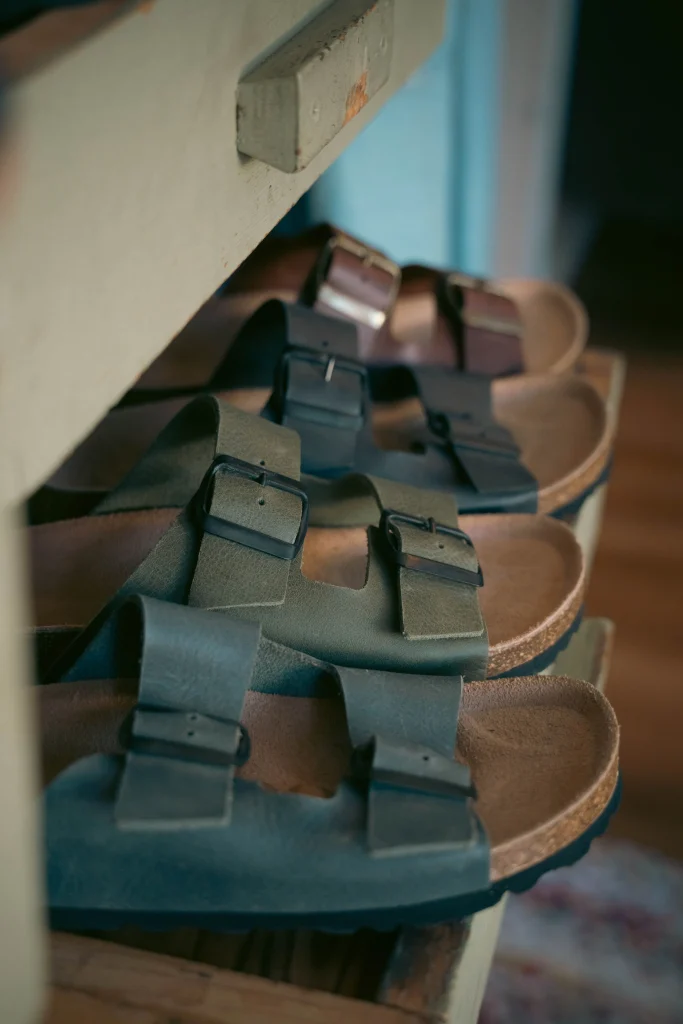
Birkenstock Arizona vs Boston sizing: do they match?
Yes, in length. Birkenstock lists all of its footwear in European sizes, so the size you wear in an Arizona is the right starting point for a Boston. Birkenstock’s own fit guide gives the conversion: add 31 to your US women’s size, or 33 to your US men’s size. The two widths work the same way on both shoes, which matters more than most people expect. Sizing and care details in this post follow Birkenstock’s US guidance as of October 2026.
What changes is how forgiving each shoe is when you get it slightly wrong. In an Arizona, an open toe and two adjustable straps hide a lot of sins. A little short? Your toes peek past the front and you never notice. A touch tight across the foot? Loosen a strap. A Boston has a roof over your toes and a fixed shell around the forefoot, so the same small miss shows up straight away.
I wear my Arizona size in my Boston, and length has never been the problem. What surprised me was the first week, when the toe box felt snugger than any Arizona I’d owned. The suede needed a few wears to relax.
Here’s how to size a Boston without guessing:
- Find your Birkenstock size with the conversion above, or measure your foot and match it to the size chart.
- Choose your width. The little footprint stamped on the footbed tells you which one you’re holding: an outlined footprint means Regular, a filled one means Narrow.
- Step in and check that your toes don’t touch the edge of the footbed. Birkenstock says to aim for about a quarter inch of space around your foot.
- If you’re stuck between two sizes, go up. A closed toe gives you no strap to cinch and no open front to spill into, and a footbed that’s shorter than your foot is the one problem you can’t fix.
One honest caveat. Reviews don’t agree: some buyers say they needed a size up in the Boston, others say they went down, and some retailers simply tell you to order your usual. That split tells me foot shape matters as much as the number on the box, so trust the quarter inch test over any rule of thumb.

Open toe sandal vs closed toe clog: what actually changes
Strip away the upper and these two have a lot in common: the same contoured cork footbed idea, the same sizing logic, the same adjustable buckle. The difference is what wraps around your foot.
The Arizona is the summer default. Open toe, two straps, easy on and off, and it copes well when your feet swell in July heat. If it’s the Arizona look you love and you want to see what else lives in the same cork footbed neighborhood, we rounded up sandals like Birkenstock.
The Boston is a slip on clog with a closed toe and a buckle strap. It works with socks, which is the real reason it became a year round shoe, and it covers your toes when your office, your commute or the weather rules out an open front. One Michigan podiatry practice also notes that the Boston keeps your heel in place better than the Arizona does.
My take: if you can only own one and you live somewhere with real seasons, buy the Boston. If you’re somewhere warm most of the year, buy the Arizona and stop overthinking it.
Style wise, a Boston in neutral suede looks dressier than people expect with trousers and a blazer. If a clog is still too casual for your dress code, the closed toe alternative I’d reach for first is a good pair of flats, and our best ballet flats for women picks cover that.
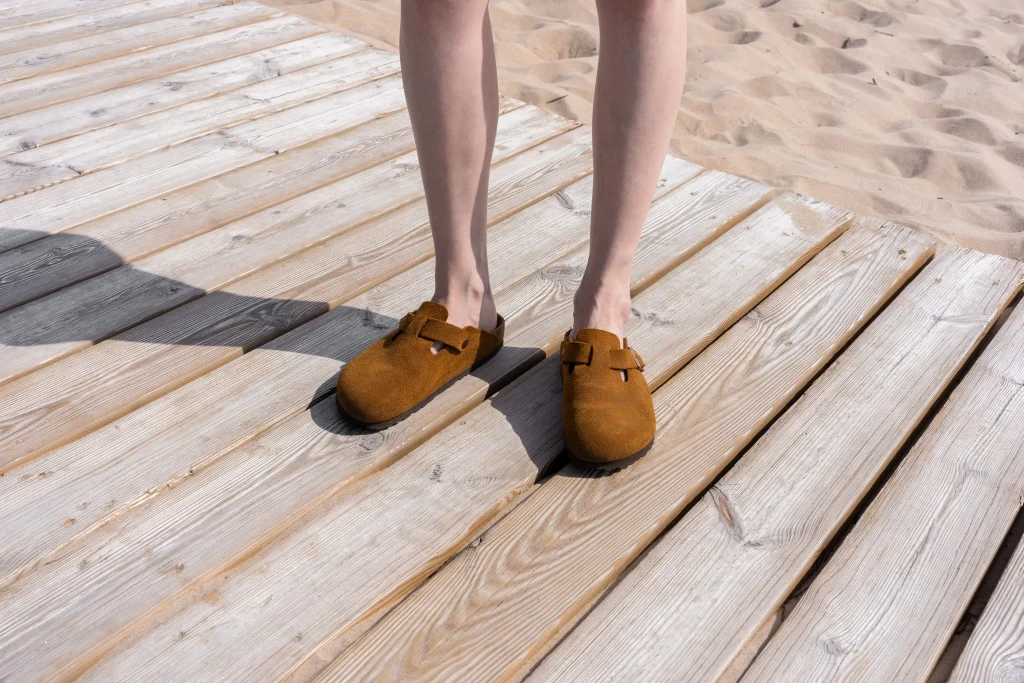
Birkenstock Arizona vs Boston for all day walking
Both shoes sit on the same style of footbed: contoured cork with a deep heel cup, arch support and a raised bar under your toes. That footbed is what you’re really paying for, so the comfort difference comes down to how the shoe holds on.
Verdict: for a long day on your feet, the Boston is the more secure shoe. The closed shell stops your foot sliding forward, and the strap keeps the heel from drifting. The Arizona wins for heat, short outings and any day when you’ll be kicking your shoes off a lot.
Neither one is a walking sneaker. They’re flat, casual shoes, and a podiatry practice I read makes the same point about Birkenstocks being flat. If you’re covering miles of pavement or a long hike, wear something built for it.
If most of your comfort needs are indoors on hard floors, you may not need a clog at all. Our guide to house shoes with arch support for women covers that side of things.
Soft footbed vs regular footbed
The regular footbed is cork and latex lined with suede. It’s firm out of the box and molds to your foot over weeks. The soft footbed adds a layer of foam under the lining, so it feels cushioned from the first wear.
My stance: if it’s your first Boston, get the soft footbed. A shoe you can wear on day one is a shoe you’ll actually break in. If you’ve worn the regular footbed before and love that firm feel, stay with it.
One podiatry practice says the soft footbed suits sensitive or diabetic feet, while the regular cork gives more structure for most conditions. If you have a foot condition, ask your own podiatrist which firmness makes sense before you buy either.
Birkenstock Arizona vs Boston width: narrow or regular?
Birkenstock makes both shoes in two widths. Regular suits medium to wide feet, and Narrow suits narrow to medium feet. For women, Birkenstock says Regular lines up with C and D widths and Narrow with A and B, and that Narrow fits most women’s feet. For men, Regular covers D through EE and Narrow covers B and C.
The Arizona lets you adjust a strap to make up for a so so width. The Boston gives you far less to work with because the toe box is fixed, so width is where I’d spend the most time. Stand in the shoes and look at the footbed rim. Your foot should sit comfortably inside it, not spill over the sides. If it hangs over the edges, move to Regular. If it floats with plenty of room on both sides, try Narrow, though Birkenstock says even in a Narrow you should keep a little room along the sides and your foot shouldn’t ride up the rims.
Width is the mistake I’d flag first for anyone ordering a first Boston online.
How long does a Boston take to break in?
Birkenstock doesn’t put a number of days on it, but it does give you a method worth following. Flex the footbed in your hands before the first wear, with one hand under the toe and one under the heel. Keep the strap loose. Wear the shoes at home for one to two hours at a time, build up gradually, and tighten the strap as the footbed starts to mold to your foot.
In my case the regular cork footbed took about two weeks of short wear before the toe bar stopped announcing itself, and the soft footbed felt fine on day one. Yours will vary with the footbed, the upper and your feet. If something keeps pinching or rubbing after a few short sessions instead of easing off, treat it as a fit problem, not something to push through.
Do Bostons get ruined by water?
Not by a splash. By soaking, yes, and suede is the most vulnerable. Birkenstock’s care guidance says most styles shouldn’t be immersed in water, because soaking can damage the sealant and change how the materials look. If your shoes get wet, let them dry slowly, away from direct heat. Treat leather, suede and nubuck uppers with a water and stain repellent regularly, and brush suede to bring the nap back.
The part people miss is that heat does as much damage as water. Birkenstock warns that cork footbeds and EVA soles can be damaged by concentrated heat, so keep them off the radiator and out of a hot car. My rule is simple: wet shoes go on a shelf at room temperature, never next to a heater.
If your life involves puddles, boats or garden hoses, the EVA Boston is the version to buy. Birkenstock’s water friendly range is made from EVA, and it saves you the worrying. Prices and styles change, so check current options on Birkenstock’s site.
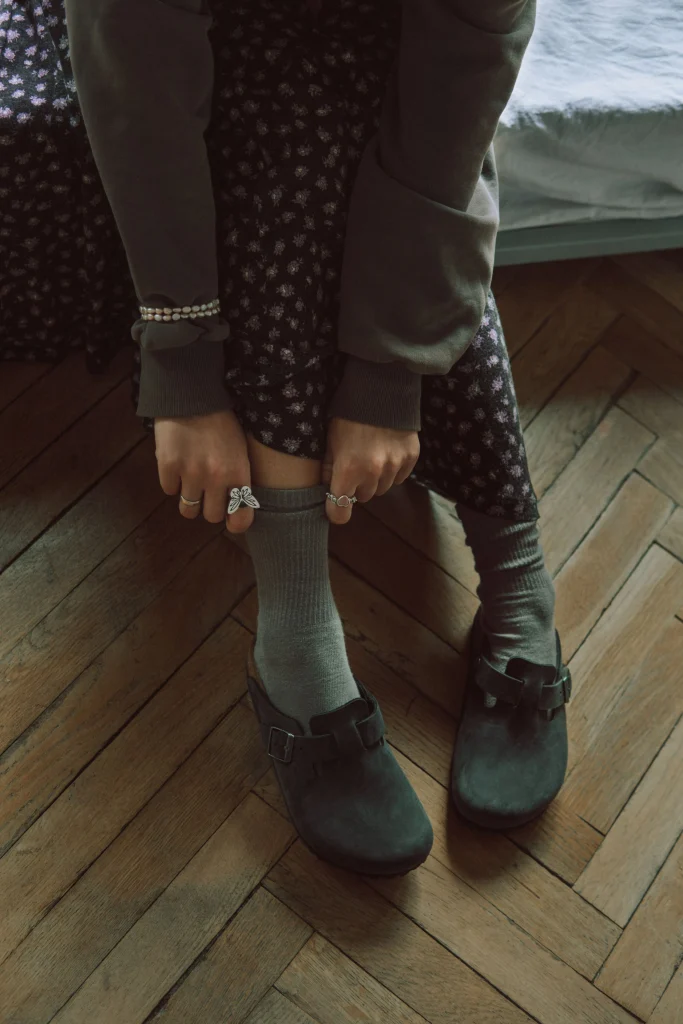
What podiatrists actually recommend
If you’re here because of heel pain, read this part slowly, because the internet overstates it.
What podiatrists tend to say is that structure matters. For sandals, they generally point to arch support, stability and adjustable straps, and Birkenstock’s contoured footbed fits that description. That’s why it comes up so often for plantar fasciitis as casual or home footwear instead of going barefoot.
What they don’t say is that a Birkenstock treats anything. The Michigan practice mentioned earlier points out that Birkenstocks are flat shoes and that for severe plantar fasciitis a slight heel lift of two to three centimeters may bring relief faster. Its flat feet guidance adds that these shoes shouldn’t replace custom orthotics for significant flat feet, overpronation, plantar fasciitis or structural foot problems. If you have ongoing heel pain, see a podiatrist rather than trying to shop your way out of it.
A quick word on the APMA Seal. The American Podiatric Medical Association says its Seal of Acceptance is not an endorsement. It recognizes products a company has submitted, judged on whether they allow normal foot function and promote good foot health, and APMA doesn’t compare competing products. Because it’s awarded product by product, I wouldn’t assume a Boston carries it just because an Arizona does. Check the exact style.
Frequently Asked Questions
Does Birkenstock Boston sizing match Arizona?
In length, yes. Both use the same European sizing and the same two widths, so your Arizona size is the right place to start. The closed toe is less forgiving, so check for about a quarter inch of space around your foot and go up if you’re between sizes.
How do I size a Boston if I’ve never owned Birkenstocks?
Add 31 to your US women’s size or 33 to your US men’s size, then pick Regular or Narrow using the footprint on the footbed. Finish with the quarter inch test, and order from somewhere with easy returns if you can’t try them on in person.
Are Bostons still in style?
Yes. Birkenstock’s US site still lists the Boston among its Most Wanted styles and its best selling clogs, and a September 2026 style roundup calls it a trend that’s staying put. If you dislike trend cycles, neutral suede in taupe or black is the safest pick.
Can I wear Bostons in the rain?
A light drizzle won’t ruin them, but soaking can, and suede suffers most. Dry them slowly away from heat, treat the upper with water repellent, or buy the EVA version if wet weather is part of your routine.
Which is better for wide feet, the Arizona or the Boston?
Mostly the Arizona, because the straps give you adjustability and your toes aren’t boxed in. If you love the Boston, choose Regular width and make sure your foot sits inside the footbed rim instead of over it.
So, which one fits you better?
Birkenstock Arizona vs Boston isn’t a style contest. It’s a question about your feet and your week. Start with the same size and width, trust the quarter inch test over any rule of thumb, and remember the Boston is the less forgiving of the two when it comes to width.
Pick the Arizona if you want warmth, wiggle room and easy on and off. Pick the Boston if you want socks, seasons and a more secure hold. Whichever you choose, give it a week of short wear before you judge it, keep it away from heaters, and see a podiatrist if foot pain is what sent you shopping.
If you’re still weighing options, the guides linked above are a good next stop. The best Birkenstock is the one you’re still reaching for in month six.