
Shiny forehead by second period. Blotting papers living permanently in your backpack. Washing your face three times a day and somehow still looking greasy by noon. If any of that sounds familiar, your skin isn’t broken — it’s just hormonal, and there’s a routine that actually fixes it.
Oily skin during your teen years isn’t a hygiene problem. It’s biology. Puberty triggers a surge in androgens that tell your sebaceous glands to produce way more oil than your skin actually needs. The good news? A consistent oily skin skincare routine for teens doesn’t need to be complicated or expensive. These six steps will get your oil under control without wrecking your skin barrier in the process.

Step 1: Cleanse Twice a Day (Not Three Times)
Here’s where most teens go wrong: they over-wash. Washing your face four or five times a day feels logical when it’s oily, but it backfires badly. Stripping your skin of all its natural oils tells your sebaceous glands to panic and produce more oil to compensate. You end up in a cycle that keeps getting worse.
Wash your face twice — once in the morning, once at night. That’s it.
For your cleanser, look for a gel-based formula that’s labeled oil-free and non-comedogenic (which just means it won’t clog your pores). If you’re also dealing with blackheads or acne, a cleanser with 2% salicylic acid is a strong choice — it’s a beta-hydroxy acid that dissolves inside the pore to clear out oil and dead skin cells, not just on the surface.
What to avoid: anything with alcohol as a primary ingredient, heavy fragrance, or grainy physical scrub beads. All three damage your skin barrier and make oil production worse over time.
Affordable picks to look for: CeraVe Acne Control Cleanser, Neutrogena Oil-Free Acne Wash, La Roche-Posay Effaclar Gel
Step 2: Use a Toner (The Right Kind)
Toner has a bit of a bad reputation in teen skincare because the old-school versions were loaded with alcohol and left skin feeling tight and raw. Those you should absolutely avoid.
A good alcohol-free toner, though, is genuinely useful for oily skin. It removes the last traces of oil and product that your cleanser missed, helps balance your skin’s pH after washing, and preps skin to absorb whatever comes next more effectively.
Look for toners with witch hazel, niacinamide, or a low concentration of salicylic acid. Apply it with a cotton pad right after cleansing and before anything else.
One thing worth knowing: toner is optional if your budget is tight. It’s a step that adds value, but it’s not the foundation of this routine. If you’re choosing between a toner and a good moisturizer, buy the moisturizer.
Step 3: Treat Blemishes Directly (Don’t Layer Actives)
If you’re dealing with active breakouts alongside general oiliness, this is where you address them — but with one important rule that most teen skincare guides skip over.
Don’t stack harsh actives. Using salicylic acid, benzoyl peroxide, and a retinoid all in the same routine at the same time causes contact dermatitis — severe chemical irritation that looks and feels like a massive breakout. It’s one of the most common mistakes teens make after watching skincare content online.
Pick one treatment based on your main concern:
- Salicylic acid (BHA): Best for blackheads, clogged pores, and general oiliness. Exfoliates inside the pore.
- Benzoyl peroxide (2.5–5%): Better for active pimples and acne bacteria. Use gel formula for oily skin since creams can feel heavy.
- Adapalene (OTC retinoid, e.g. Differin): Best used at night, a few times a week, for persistent acne and pore minimizing over time. Don’t start this at the same time as benzoyl peroxide — introduce it separately once your skin has adjusted.
Apply spot treatment only to affected areas, not the whole face, unless directed by a dermatologist.
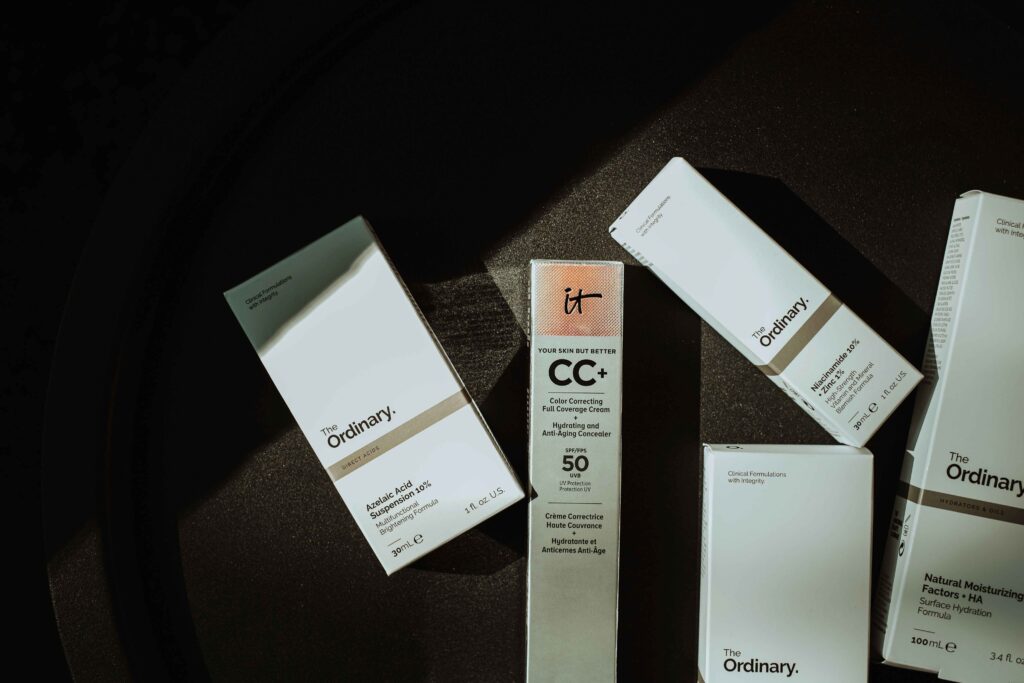
Step 4: Moisturize — Yes, Even With Oily Skin
This is the step that surprises people every time, so let’s settle it: oily skin still needs moisture.
When your skin is dehydrated, it compensates by producing more oil. Skipping moisturizer in the hope of reducing shine actually makes the problem worse. The fix isn’t to go without — it’s to use the right kind.
For oily skin, you want a lightweight, oil-free, non-comedogenic gel moisturizer. Gel formulas absorb quickly, don’t leave a greasy film, and give your skin the hydration it needs without piling on extra weight. Ingredients like hyaluronic acid and niacinamide are particularly good here — they hydrate without contributing to shine and niacinamide actively helps regulate oil production over time.
The matte finish you’re after doesn’t come from skipping this step. It comes from choosing the right formula.
Affordable picks: CeraVe PM Facial Moisturizing Lotion, Neutrogena Hydro Boost Gel-Cream (oil-free version), e.l.f. Holy Hydration! Face Cream Lightweight
Step 5: Apply Sunscreen Every Morning
Sunscreen is the step most teens skip, and it’s genuinely the one that will matter most in ten years.
UV exposure worsens active acne and, more importantly, turns temporary red acne marks into longer-lasting dark scars. If you’re using any acne treatment — salicylic acid, benzoyl peroxide, adapalene — your skin is more sensitive to sun damage than usual, which makes SPF even more critical.
The reason teens skip it is that traditional sunscreens feel thick, greasy, and leave a white cast. That’s a product problem, not a sunscreen problem. For oily skin, look for:
- Mineral or hybrid sunscreens with SPF 30 or higher
- Oil-free, non-comedogenic formula
- Matte or “clear skin” finish
Apply it as the last step in your morning routine, after moisturizer. You don’t need much — a nickel-sized amount for your face is enough.
Affordable picks: La Roche-Posay Anthelios Clear Skin SPF 60, EltaMD UV Clear SPF 46, Neutrogena Clear Face Sunscreen SPF 55
Step 6: Exfoliate Once or Twice a Week
Regular exfoliation is what keeps your pores from getting congested in the first place. Dead skin cells mix with excess oil and plug your pores — that’s how blackheads form, and why skin can look dull even when it’s clean.
For oily skin, chemical exfoliants work better than physical scrubs. Harsh granular scrubs create micro-tears in skin and spread bacteria — skip them entirely. Instead, look for a leave-on exfoliant with salicylic acid or glycolic acid used one to two times a week.
The key word here is gradual. If you’re new to exfoliating, start once a week. Give your skin two to three weeks to adjust before increasing frequency. More is not better — over-exfoliating strips your barrier and triggers the same oil-overproduction cycle as over-washing.
Do this step at night, not in the morning, so your skin has time to recover before sun exposure.
A Few Extra Habits That Actually Help
The routine above handles what you put on your skin. These habits handle what affects it from everything else:
Keep your hands off your face. Touching your face transfers oil and bacteria directly to your pores throughout the day. It’s harder to stop than it sounds, but it makes a real difference.
Wash your pillowcase and face towel regularly. Your pillowcase collects oil, sweat, and bacteria every night. Washing it once or twice a week is one of the cheapest upgrades you can make to your skincare results.
Blotting papers are your midday fix. If your face gets oily in the afternoon, blotting papers absorb surface shine without disrupting your skincare or makeup underneath. They’re not a skincare step — they’re a practical tool. Much better than washing your face a third time.
Give your routine time. Skin operates on a four-to-six week cell turnover cycle. A new routine won’t transform your skin in three days. Stick to it for at least a month before deciding whether something is working.
Frequently Asked Questions
Is it okay to use salicylic acid every day as a teen?
For most teens, daily use in a cleanser is fine because it rinses off quickly. Leave-on salicylic acid products (toners, serums) are better used every other day to start and increased gradually as your skin adjusts. If your skin feels dry or tight, pull back frequency before upping it again.
Why is my skin so oily even after washing it?
Over-washing is usually the cause. Washing more than twice a day strips your skin’s natural oils, which signals your oil glands to overproduce. Another possibility is that your moisturizer is too heavy or occlusive for oily skin — switch to a lightweight gel formula and give it a few weeks.
Do I really need all six steps?
Not all at once, especially if you’re starting from zero. Begin with cleanser, lightweight moisturizer, and SPF — that’s your foundation. Add toner, treatment, and exfoliation as your skin adjusts. Layering everything at once is overwhelming for new skin and makes it hard to tell what’s helping.
Can I wear makeup with oily skin?
Yes, but product choice matters. Look for oil-free, non-comedogenic foundations and setting sprays with a matte finish. A good skincare base — especially the moisturizer and SPF step — actually helps makeup sit better and last longer rather than sliding off.
When should I see a dermatologist?
If your oily skin is paired with persistent moderate or severe acne (painful cysts, nodules, acne that doesn’t respond to over-the-counter products after a few months), it’s time to get professional guidance. A dermatologist can prescribe stronger treatments and build a plan specific to your skin.
The Bottom Line
An oily skin skincare routine for teens doesn’t have to be a shelf full of products or a ten-step process. Six steps, consistently followed, will do more for your skin than a complicated routine you abandon after two weeks. Start simple: a good cleanser, the right moisturizer, and daily SPF. Build from there.
Your skin is doing something completely normal. You’re just learning how to work with it rather than against it.
For more on getting your skin in good shape, check out our guide on Morning and Night skincare routines — it covers the AM vs PM breakdown in detail for every skin type.