
Realm of Style. Sizing, brand and podiatrist details checked October 27, 2026.
Put a 1460 next to a 1461 and the differences are easy to miss. Same yellow stitching, same grooved sole, same rounded toe. The real change is how much leather sits above your ankle. So why does Dr Martens 1460 vs 1461 feel like such a hard call? Because that one difference changes how they fit, where they rub, and what you can wear them with.
Here’s the verdict up front. Buy the 1460 if you want one pair that handles cold weather, jeans and long days, and you can live with a break in. Buy the 1461 if you want the Docs look without the boot, especially for warm weather, cropped hems and the office. Either way, the sizing advice below matters more than the model you pick, so let’s start there.

Dr Martens 1460 vs 1461 sizing: does the 1461 run small?
Short answer: no. Neither one runs small. If anything they run roomy, and the classic mistake is ordering your usual sneaker size.
Dr. Martens’ own size guide says most of its styles run true to size, but that its original shapes, with the 1460 as the example, have a slightly wider build. Its advice is to order a size down and check your foot length against its chart. The 1461 is the brand’s second original, launched a year after the 1460, and Dr. Martens describes its toe as wide and rounded, so I treat that advice as the starting point for both. One catch: customer fit ratings on individual 1461 listings range from true to size to runs large, so read the rating on the exact pair you’re about to buy.
Dr. Martens only makes whole sizes, so if you’re a half size you have to pick a side. The brand’s rule is that half sizes in US women’s sizing should go down, while half sizes in US men’s sizing should go up. I sit between sizes myself and went down in the 1460. It felt snug for about a week, then settled. If the smaller size is genuinely too tight, adding an insole works like going half a size down, and heel grips fix a heel that slips in a roomy pair.
On day one, run the test from a foot surgeon’s guide: stand up and check that your toes don’t touch the end, then walk and check that your heel lifts only a little. Leather softens across the foot as you wear it, but it doesn’t get any longer, so length is the one thing you can’t fix later.
Does a shoe size differently from a boot? Same system, different forgiveness. In a 1460 the shaft and laces hold your heel, so a slightly roomy pair is forgiving. The 1461 has nothing above the ankle to anchor it, so a pair that’s half a size too big starts slipping at the heel quickly. That’s why I’d be quicker to size down in the shoe.
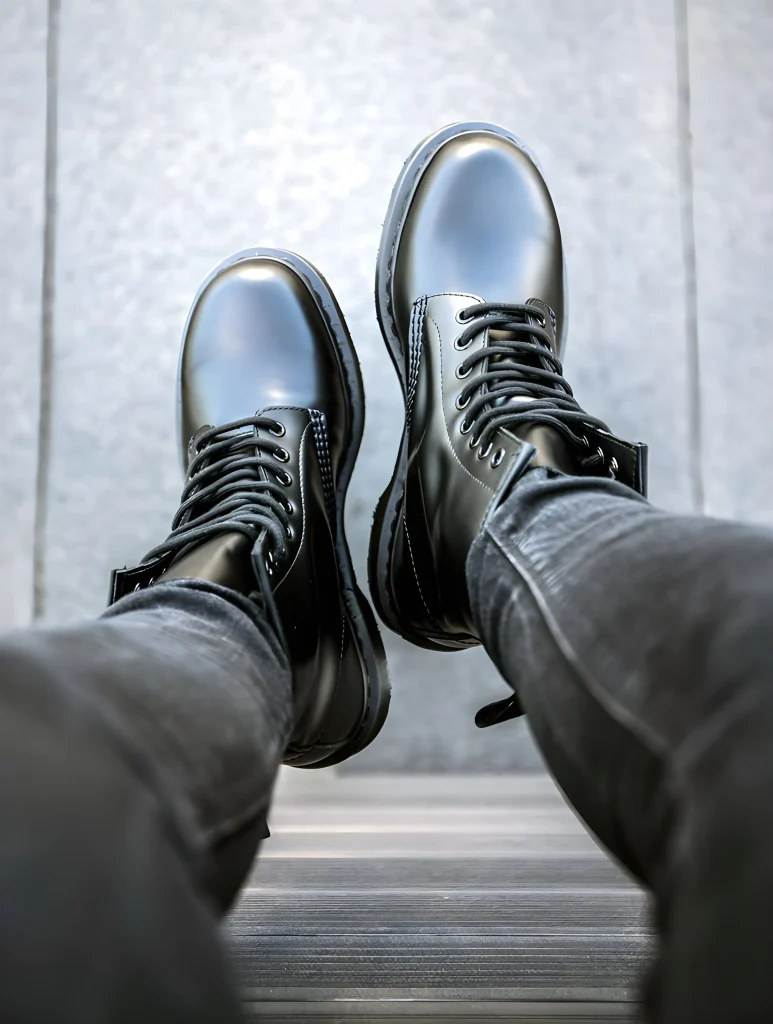
Here’s how the two compare at a glance.
| Detail | 1460 | 1461 |
|---|---|---|
| Style | 8 eyelet boot | 3 eyelet shoe |
| Ankle | Covered | Open |
| Sole | Classic Dr. Martens sole, about 1¼ inches at the heel | The same sole |
| Wear it with | Jeans, long skirts, cold weather | Cropped trousers, shorts, dresses |
| Where it usually rubs (one podiatrist’s clinic guide) | Heel, ankle bone, Achilles | Toe box and top of the foot |
| Break in estimate (same guide) | About 4 to 6 weeks | About 3 to 5 weeks |
Prices and stock change often, so check the current listing before you buy.
Dr Martens 1460 vs 1461 comfort: which is easier to walk in all day?
Verdict: the 1461, narrowly. Neither is a cushioned walking shoe.
I wore both for a few months before writing this, and when I know I’ll be on my feet from morning to night, I reach for the 1461. Less leather around the ankle means less to rub and less weight to lift. The 1460 is the better cold weather pick, but it makes you work for it.
The podiatrist view on the boot backs up that feeling. The foot surgeon’s guide describes the 1460 as firm, heavy and flat underfoot, at around 710 g a boot in a men’s US 11 going by the retailer listing he cites, with little arch contour and no real heel cup. His take: fine for most healthy feet once broken in, but not the shoe to walk in while a heel or arch is hurting. I couldn’t find a published weight for the 1461, but with less leather above the ankle it should feel lighter. The sole and footbed come from the same family, so expect the same flat feel.
The air cushioned sole also gets more credit than it deserves. It takes a little of the sting out of hard pavement, but it isn’t trainer cushioning. If your feet ache by mid afternoon, a cushioned arch support helps more than any amount of breaking in, and the surgeon says the same.
Break in time: 1460 vs 1461
Verdict: plan on weeks, not days, in Smooth leather, whichever you choose.
Dr. Martens says the stiffer the leather, the longer the break in, and that some snugness is fine but painful tightness means a different size or style. The same surgeon’s clinic site puts a leather 1460 at roughly 4 to 6 weeks and a leather 1461 at about 3 to 5. Those are his estimates, not lab measurements, but they match what I went through.
Where it bites is different. On the 1460 the trouble spots are the back of the heel, the ankle bone and the Achilles. On the 1461 that clinic guide points to the toe box and the top of the foot. My first week in the 1460 left a blister on the back of my heel by day three. The 1461 spared my heel, but the leather creased across the top of my foot and left a sore spot. Everyone calls the shoe the easy one. In my case it was only easier on the ankle.
What worked: a cushioned sock high enough to meet the top of the boot, which Dr. Martens recommends, short sessions at first, and a blister plaster on the heel before the first wear rather than after the blister. The surgeon gives the same advice about covering hot spots early. If you’d rather skip all of this, jump to the Pascal further down.
Wide feet: which one fits better?
Verdict: either works, as long as you buy the unisex or men’s version and skip the Pascal.
Dr. Martens says its men’s and unisex styles have the wider, rounder toe and footbed and suit medium to wide feet, while its women’s styles are slimmer and more tapered. If a women’s 1460 feels narrow, the brand suggests trying the unisex 1460 instead, and for slim styles on wider feet it points to soft leather or sizing up. The Pascal Virginia is the exception: Dr. Martens’ European listing describes it as a narrower fit.
Where I’d split the two is the instep. If you have a high instep or your feet swell by evening, I’d take the 1460. Eight eyelets give you room to loosen over the top of the foot, a point the foot surgeon also makes, while three eyelets give you far less to adjust. A wide, flatter foot does fine in either.
How much height does the 1461 add?
Verdict: no more than the 1460. They ride on the same sole.
Dr. Martens lists its original sole at about 1¼ inches (3.17 cm), and the 1460 is listed at roughly the same heel height, so you get the same lift from the ground in either. What changes is how tall you look. The boot covers your ankle and breaks the leg line there. The shoe shows ankle and sock, which tends to lengthen the leg line under cropped trousers, skirts and shorts. If you want real extra height, you need a platform version such as the 1461 Bex, which Dr. Martens describes as the classic shoe with added height and a deeper, more aggressive tread. Check the listing for the exact platform height, since versions differ.
Lacing: how to lace the 1460 and the 1461
Verdict: the 1460 gives you options. The 1461 barely gives you any.
With a new pair, Dr. Martens suggests leaving one or two sets of eyelets open at the top, so the collar doesn’t rub while you’re still laced high enough to feel secure. Some people like wrapping the laces around the ankle. The brand also recommends relacing a new pair so the tip of each lace comes up from underneath the eyelet, which holds more securely.
I leave the top two open on the 1460 for the first month, then close them. The foot surgeon’s clinic site lists lace bite from tight lacing as a common problem, and on a 1460 the spot that matters is the crease at the top of the foot, so loosen there and keep the ankle snug so your heel doesn’t lift. On the 1461, with only three pairs of eyelets, there’s so little to play with that I simply loosen the middle pair, because that’s where the pressure sat on mine.
1460 vs 1490 and the 1460 Pascal
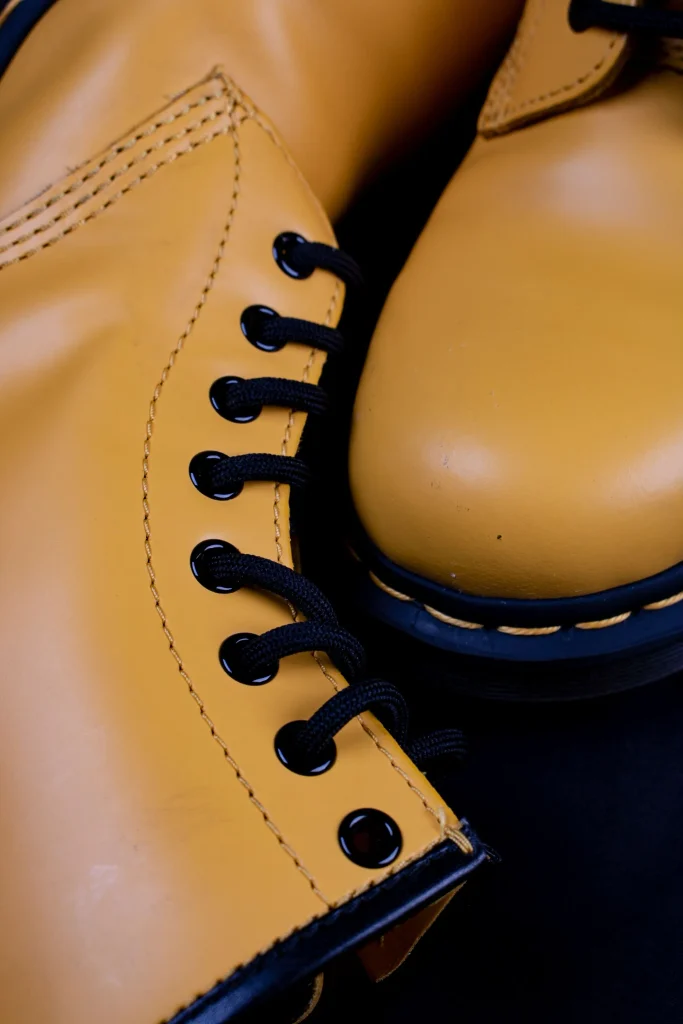
The 1490 is the 1460’s taller sibling. Retailers describe it as a 10 eyelet boot laced even higher, sitting around mid calf. More height means more lacing time and more stiff collar to break in, so unless you specifically want the tall look, I’d stay with the 1460. Choosing between the 1490 and the 1461 is really choosing between the two ends of the range.
The 1460 Pascal is the same 8 eyelet boot on the same sole, but in soft Virginia leather instead of Smooth. Dr. Martens describes Virginia as a soft pebbled leather that’s supple right out of the box, and its UK site calls the Pascal range no break in. The tradeoff, according to one review on Reviewed, is that the thinner, pretreated shaft may not last as long as the original Smooth leather. Pick the Pascal if weeks of blisters is what’s putting you off. Pick Smooth if you want the polished shine and the longest life.
Dr. Martens also sells vegan versions of its classics, so if you’re buying resale and want to be sure you’re getting leather, our guide on how to tell if leather is real or fake covers the quick checks.
So which one should you buy?
Buy the 1460 if it’s cold where you live, you wear jeans most days, or you have a high instep and want lacing room. Buy the 1461 if you want the look in warm weather, you wear cropped hems or dresses, or you’d rather skip the ankle break in. Buy the Pascal if weeks of blisters is the thing putting you off. And if you have a flare of heel pain, Achilles trouble or numb feet, talk to a podiatrist before you buy either.
If budget is what’s pushing you toward a different pair, our roundup of 9 alternative dupes for Dr. Martens is the place to look.
Frequently Asked Questions
Are Doc Martens out of style in 2026?
No, and the brand’s own numbers back that up. In the year to March 2026, Dr. Martens reported shoes as its standout performer, up 19% with the 1461 named among the drivers, while boots revenue fell 8% but boots still made up 52% of sales, and the company sold about 10.2 million pairs in total. The company was also deliberately cutting back on discounting, so a dip in revenue isn’t the same as a style going out of fashion. My read: the 1461 feels the most current right now and the 1460 is the one that never really leaves.
What do podiatrists say about Doc Martens?
Not with one voice, and nothing I found amounts to a blanket endorsement or warning. The clearest source is a guide by Tom Biernacki, a board certified foot and ankle surgeon, who says they’re fine for most healthy feet once broken in, but heavy, stiff and flat underfoot with little arch support. He advises against making them your walking shoe while a heel or arch hurts, and he flags Achilles pain, bunions, diabetes and numb feet as reasons to be careful. He also points out that no trial has tested Doc Martens, so this is clinical judgment about the design, not a study. An older review by another podiatrist, of a different Dr. Martens boot, argued that a rigid sole can ease strain on some painful joints but doesn’t suit every foot. If you have ongoing foot pain or diabetes, ask your own podiatrist first.
Is the 1461 the same size as the 1460?
Usually a sound starting point, because both come from the brand’s original shapes with a wide rounded toe. But Dr. Martens only names the 1460 in its size guide, and fit ratings on 1461 listings range from true to size to runs large, so check the rating on your exact pair. Be quicker to size down in the shoe, since nothing above the ankle holds your heel.
Can you wear Doc Martens to the office?
In most smart casual offices, yes. A black Smooth leather 1461 with a proper shine reads dressier than the 1460, which I’d keep for casual days. If your dress code is stricter, our guide to office boots for women shows pairs that look more polished at a desk.
Final thoughts
The 1460 and the 1461 are closer than they look. Same sole, same stitching, same stubborn leather, and the same advice applies to both: size carefully, break them in slowly, and don’t judge them in the first week.
If you like seeing two near identical pieces settled head to head, our Birkenstock Arizona vs Boston comparison does the same for sandals and clogs. Whichever Docs you pick, the best pair is the one you’re still wearing after week six.