
You put on the boots you actually love, the ones with a bit of heel and a lot of personality, then stand at the door running through every reason they might read wrong for a client meeting. Too casual. Too weekend. Too much personality for a Tuesday. I’ve talked myself out of great boots more mornings than I’d like to admit, usually while already running late.
Here’s the truth: office boots don’t have to be a gamble. The right pair reads polished, handles a full day on your feet, and still gets you out the door before your coffee goes cold. Below are ten pairs that pull that off, plus a quick primer on what actually makes a boot work for the office in the first place.
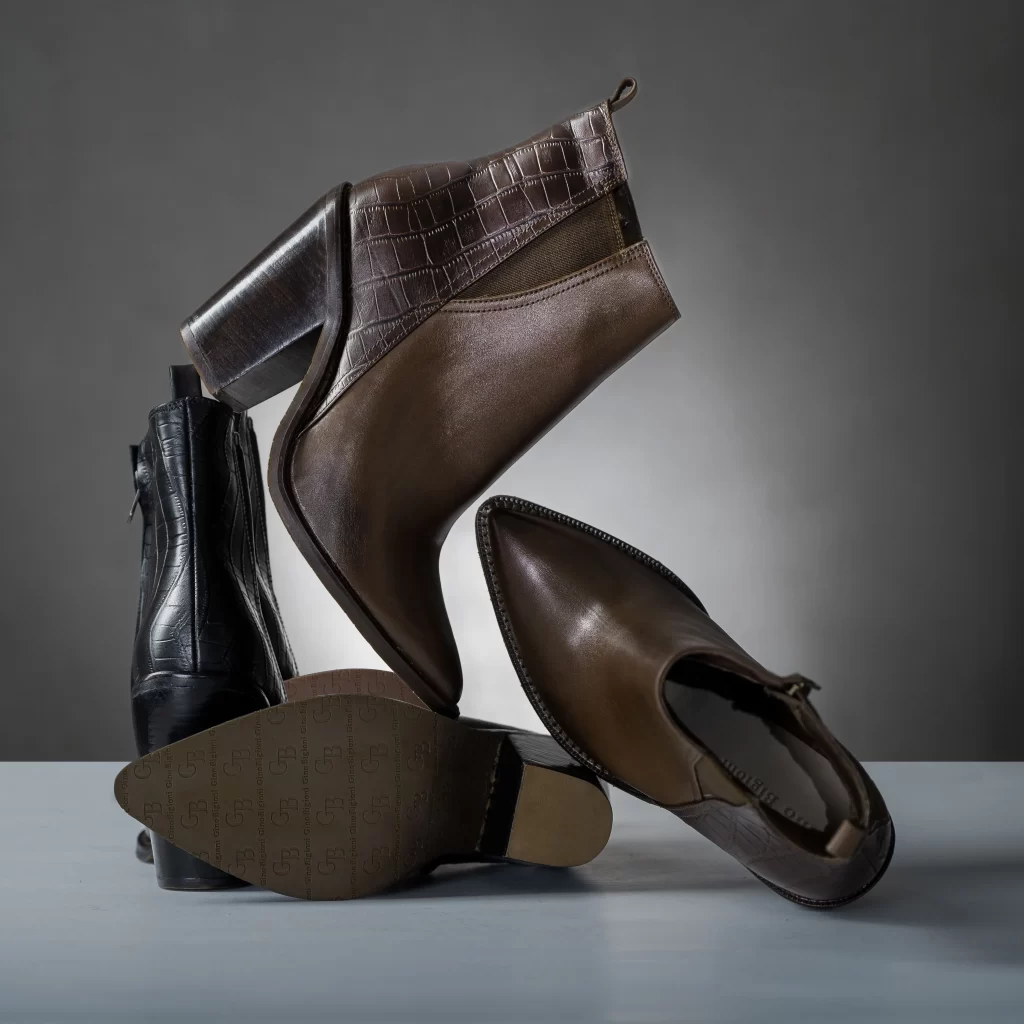
What Actually Makes a Boot Office Appropriate?
Not every boot earns a seat at the conference table, but more qualify than most people think. The general rule holds up across almost any dress code: a clean silhouette, a heel no higher than about three inches or a flat sole with real structure, and a material that reads polished rather than outdoorsy. Leather, suede, and quality vegan leather all work. Shearling cuffs, heavy hiking tread, and anything that looks built for a trail usually don’t, no matter how comfortable it is.
Chelsea boots are close to a guaranteed yes almost everywhere, since the slim silhouette reads dressy by default. Knee high boots work too, as long as the shaft sits close to the leg and the heel stays reasonable. Combat boots are trickier. In a creative or casual office they can work paired with tailored pieces, but in a conservative one they usually read too rugged no matter how you style them. Cowboy boots are the biggest gamble of the bunch. I love mine, but I only wear them to work on days I already know I’m not walking into a client meeting.
The workwear blog Corporette has tracked this exact question for years, and their read lines up with mine: comfort focused boot brands have gotten dramatically better without giving up the polish that makes a boot read professional in the first place.
What to Look for Before You Buy
Comfort matters more in a boot than in almost any other office shoe, since you’re dealing with a stiffer structure around your whole foot and ankle instead of just underfoot. Look for a cushioned footbed, and if you deal with plantar fasciitis or flat feet, prioritize a boot with real arch support built into the sole rather than a soft insole that packs down after a few wears. That difference is what separates a boot that feels fine at nine in the morning from one that still feels fine at five.
Sizing runs inconsistent across brands, more so with boots than with flats or sneakers. I’ve returned more pairs than I’d like to admit because I assumed my usual size would carry over from one brand to the next, so check each brand’s own size chart before you order. If you’re shopping for the cold months, look specifically for a waterproof or water resistant label. A boot that looks fine but soaks through on your commute isn’t actually saving you any time. And if you have wider calves, shop the wide calf version of a style instead of sizing up the regular one. Sizing up gets you room in the foot, not the shaft, so you end up with a boot that gapes at the top and still pinches at the bottom.
With that groundwork out of the way, here are ten pairs that actually hold up to a full office day, from the one I’d grab first to the one worth saving for.
10 Office Boots That Actually Work
1. Madewell The Sylvia Chelsea Boot: Best Everyday Pick
This is the pair I’d tell a friend to buy first if she only wants one boot for the whole season. The silhouette is slim, the two inch heel is low enough to walk normally in, and the leather looks more expensive than it is. It slides on in the morning without a fight, which matters more than people expect when you’re already running behind. Forbes Vetted put more than thirty pairs through testing before landing on this one, calling out how rare it is to find a Chelsea boot that goes from commute to conference room without missing a step. Wear it under straight leg trousers or with a midi skirt and it reads finished, not thrown together.
2. Vionic Rosemont Ankle Boot: Best for Arch Support
If your feet are the reason boots feel like a trade off, start here. Vionic builds arch support directly into the sole instead of relying on a soft insole, and several of its styles carry the American Podiatric Medical Association seal for it. The Rosemont comes in a suede upper that looks like a normal ankle boot rather than an orthopedic one, so nobody in your ten o’clock meeting will know your feet are the most comfortable ones in the room.
3. Blondo Mayes Waterproof Chelsea Boot: Best for Rain and Snow Commutes
I ruined one too many pairs of suede boots on a slushy sidewalk before I learned to just buy something built for it. Blondo treats its leather with a water resistant seal that actually holds up, not the kind that wears off after one wet week, and the treaded sole keeps you upright on wet pavement or icy stairs. It still reads like a normal Chelsea boot from a few feet away, which is exactly the point.
4. Sam Edelman Penny 2 Riding Boot: Best Wide Calf Boot
Most wide calf boots solve the fit problem and lose all the polish along the way. This one doesn’t. It keeps the classic equestrian shape, so it tucks under trousers or sits under a skirt without looking bulky, while actually accommodating a fuller calf instead of adding an inch of stretch panel and calling it done. If you’ve been sized out of every tall boot at the mall, try this one first.
5. Sam Edelman Saige Ankle Bootie: Best Nude Boot
Nude shoes get all the attention in summer and almost none once the weather turns, which is a mistake. A nude boot in a shade close to your own skin tone creates one unbroken line from hem to foot, doing the same leg lengthening trick as a nude heel with far more coverage for actual winter weather. This bootie comes in a soft suede that leans camel rather than pink toned, which makes it easier to match across a wider range of skin tones than a true blush shade would.
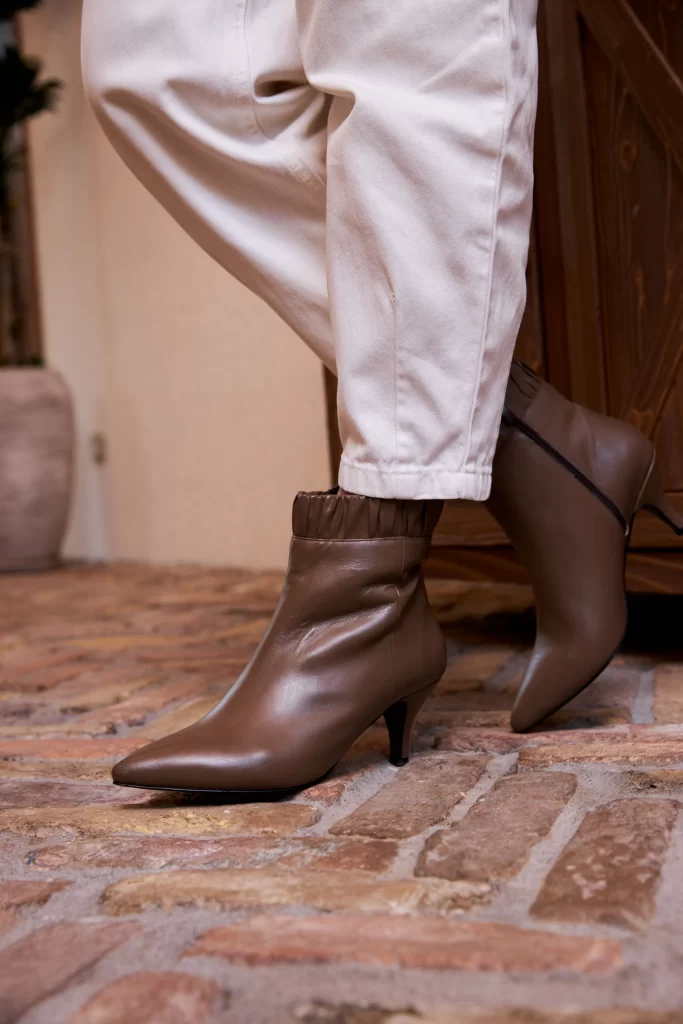
6. Frye Melissa Shootie: Best Shoe Boot
A shootie, sometimes just called a shoe boot, splits the difference between a dress shoe and an ankle boot, cropping right at or just above the ankle bone instead of climbing higher up the leg. Frye builds this one from full grain leather with the kind of construction that ages well instead of falling apart after a season, which matters if you’re treating it as an investment piece rather than a trend. It’s the pair I reach for on days I want the polish of a boot without the bulk.
7. Quince Eco Knit Heeled Bootie: Best Budget Pick
You don’t need to spend three figures to get something that looks put together. This one is built from a stretchy knit fabric rather than leather, which keeps the price down and also means it flexes with your foot instead of needing a break in period. It won’t survive a decade of daily wear the way a leather pair might, but for the price, it earns its spot in a rotation instead of carrying the whole week alone.
8. Reformation Katerina Chelsea Boot: Best Lug Sole Boot
If your office skews casual or creative, a lug sole Chelsea boot gives you some of that combat boot attitude without fully committing to it. The chunky tread adds real traction, which is genuinely useful once the sidewalks ice over, and the classic Chelsea shape keeps it from reading too tough for a client facing role. Pair it with tailored trousers, not joggers, if you want it to still read like a work outfit.
9. Stuart Weitzman 5050 Gisele Knee High Boot: Best Investment Boot
This is the splurge on the list, and I think it earns it. The suede upper looks expensive from across a room, the heel sits low enough to actually walk in, and a stretch panel at the back means it fits close to the leg without a zipper fighting you every morning. Wear it under a shift dress or tucked under wide trousers, and expect it to outlast several trend cycles before it needs replacing.
10. Cole Haan Catlyn Block Heel Bootie: Best Heel for All Day Wear
A block heel gives you height without the wobble of a thin stiletto, which matters if your day involves more walking than sitting. The Catlyn keeps the heel low and stable while still looking dressier than a flat boot, and the rounded toe keeps it from feeling severe. It’s the pair I’d recommend to someone who wants a heel but has sworn off anything that makes the last hour of the day painful. If a heel with a bit more height still appeals to you some days, I put Hotter Donna shoes through a full six hour event and they held up better than I expected.
How to Style Office Boots So They Read Professional
The boot does most of the work, but how you pair it decides whether the whole outfit reads professional or off duty. Straight leg and slim trousers worn just at or slightly over the top of an ankle boot keep the line clean. A pencil skirt or shift dress with dark tights and a black boot is close to foolproof, and if you want the leg lengthening trick, swap in a nude boot instead of dark tights altogether.
Stick to one dominant boot color per outfit rather than mixing black boots with a brown bag and a cognac belt. It sounds like a small detail, but it’s the fastest way to make an otherwise polished look feel unfinished. And if your office allows any color story at all, brown boots office outfits pull surprisingly well with camel, cream, and deep green, colors that can feel flat against black boots but come alive against brown.
One opinion I’ll defend: skip the boot cut jean tucked fully into a tall boot for anything client facing. It reads more brunch than boardroom, no matter how expensive the boots underneath actually are.
Frequently Asked Questions
Can you wear boots to a job interview?
Yes, as long as the boot is clean, the heel is reasonable, and the style matches the formality of the industry. A sleek Chelsea boot or a low block heel bootie works almost everywhere. Save the cowboy boots and anything with heavy hardware for after you have the job.
Are knee high boots too much for the office?
Not if the shaft sits close to your leg and the heel stays under about three inches. The boots that read too dressed up are usually the ones with a dramatic slouch or an extra tall platform, not the height itself.
Do nude boots actually make your legs look longer?
Yes, for the same reason a nude heel does. Matching the boot to your skin tone removes the visual break between your leg and your foot, so the eye reads it as one continuous line instead of two separate pieces.
Are combat boots ever appropriate for work?
In a creative or casual office, often yes, especially paired with tailored trousers instead of distressed denim. In a conservative office, they’re one of the harder styles to make work no matter how you style them.
How many pairs of office boots do you actually need?
Two is a realistic starting point: one in black for the days you want something foolproof, and one in brown or nude for outfits that need a softer contrast. Everything past that is really backup for when one pair is at the cobbler or soaked from the commute.
Final Thoughts
Ten pairs is a lot of options, but you don’t need all of them. Pick the one or two that solve the specific problem you actually have, whether that’s a commute through slush, calves that never fit tall boots, or a closet missing a decent nude option. The right office boot should disappear into your day, not become something you’re managing every time you stand up from your desk.
If your dress code leaves room for more than boots, my guide to business casual shoes for women rounds up the flats and loafers worth adding next.