
My feet were sweating through a pair of closed toe flats in a conference room with broken air conditioning, and that was the week I stopped pretending office sandals were off the table. It was the third heat wave of the summer, the building’s AC guy still hadn’t shown up, and gritting my teeth through eight hours in stuffy shoes wasn’t making me look more professional, just more miserable. That’s usually the same week searches for office summer shoes spike everywhere, and for good reason. Sandals can absolutely work for a real workday, closed conference rooms and client meetings included, if you pick the right ones.
I spent about ten weeks this summer rotating ten different pairs through actual workdays, not just wearing them around the house for an afternoon. These are the ten that earned a permanent spot in my rotation, plus what to actually look for before you buy your own.
Are Sandals Actually Office Appropriate?
Short answer: usually yes, and I want to push back on the idea that a heel is what makes a sandal read as professional, because after this summer, I don’t think that’s true anymore.
The honest answer depends more on your specific office than any blanket rule. A law firm or a client facing role in banking is going to expect more coverage than a marketing agency where the loudest sound on a Tuesday is a mechanical keyboard. What actually signals professional isn’t heel height, it’s condition, structure, and material. A structured leather sandal with a clean strap and a solid sole reads polished even completely flat. A scuffed sandal in cheap synthetic material does not, no matter how tall the heel.
Fashion editors have been saying something similar for a while. Marie Claire’s own fashion team has pointed out that a heeled mule or a strappy sandal paired with tailored pieces reads just as polished as a traditional pump, while flip flops stay off limits no matter the price tag. That tracked with everything I found wearing these ten pairs into real meetings all summer.
I tested my own theory directly. On a day with two client calls and lunch with my manager, I wore the flattest pair on this list, a simple slide, instead of anything with a heel, and nobody blinked. The sandal itself did the work, not the height. If your office already allows flats and loafers without a second thought, a well made flat sandal clears the same bar.
If you work somewhere genuinely conservative, closed toe is still the safer call, and our guide to business casual shoes for women covers options that split the difference between a sandal’s breathability and a loafer’s coverage.
What to Look for Before You Buy
Not every sandal that looks polished is one your feet will forgive by hour six. The American Podiatric Medical Association breaks down where each sandal style tends to go wrong, and after wearing ten pairs on real workdays, their read matches what I felt. Wedges and espadrilles can wobble on a narrow sole and roll an ankle on stairs or uneven pavement. Thin flat slides often skip real arch support entirely, so the cushioning feels great in the store and goes flat by lunch. Tall platforms concentrate pressure right under the ball of your foot, which is exactly where a long day of standing starts to hurt.
None of that means avoid those styles. It means match the style to your actual day. If you’re on your feet moving between departments, sandals for standing all day are a real design problem, not just a comfort preference, so look for a contoured or built in footbed rather than a flat piece of foam glued to a sole. If you’re mostly seated at a desk, a thinner sole matters less than how the strap sits against your foot, since that’s the part doing the rubbing during a full day of wear.
Three things I check on every pair now, after learning the hard way: a sole that doesn’t twist too easily in the middle, a strap in real leather or a soft leather alternative instead of stiff synthetic, and enough width at the widest part of my foot that nothing pinches by the third hour.
With that in mind, here are the ten pairs that actually held up, plus the one that taught me a lesson the hard way. Sizing, color options, and pricing shift by retailer and season, so treat the specifics here as a starting point rather than a guarantee.
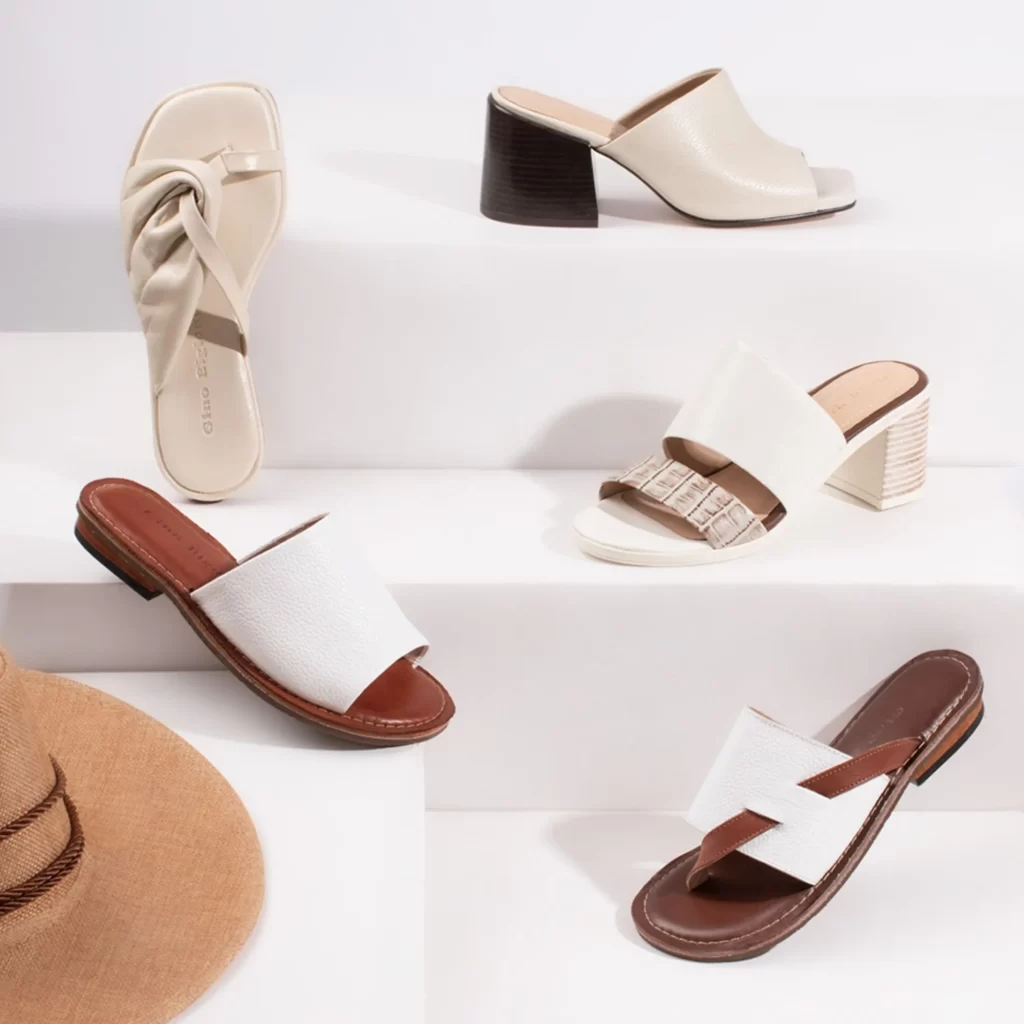
1. Birkenstock Mayari: Best for All Day Arch Support
This is the pair I reached for most across the full ten weeks, and it’s the one I’d tell a friend to buy first. The Mayari has two adjustable straps instead of the single strap on the classic Arizona, which gives it a slightly dressier, more grounded look, less beach, more desk. Birkenstock’s cork and latex footbed molds to your foot over the first couple of weeks of wear, and mine had fully broken in by week three. After that, an eight hour day on hard office flooring genuinely stopped registering as a foot problem, which hadn’t happened with any flat sandal I owned before this.
The one adjustment worth knowing about: the footbed feels stiff and almost too structured for the first several wears, before it molds to your foot. Wear it around the house or on short errands first, not for the first time on a day packed with meetings.
2. Vionic Amber: Best for Adjustable Fit and Arch Support
If your feet are wide, narrow at the heel, or somewhere in between depending on the shoe, the two adjustable straps on the Amber solve a fit problem the Mayari can’t. Vionic built this one around their own orthotic footbed, the same technology that earns several of their styles the APMA Seal of Acceptance, and you can feel the difference the moment you put weight on your heel. There’s a real contoured arch under there, not just a flat cushion.
What I didn’t expect was how much less foot fatigue I had at the end of days when I was walking more than sitting, client site visits, grabbing lunch three blocks away, that kind of thing. This is the pair I’d hand to someone dealing with plantar fasciitis or general arch pain who assumed sandals were off the table entirely.
3. Naturalizer Meg: Best Wedge for a Day of Walking
The Meg is a low wedge, about an inch and a half, with just enough lift to make you feel put together without tipping into regret by 3pm. Naturalizer builds a cushioned footbed into most of their line, and the Meg’s is soft right out of the box, no lengthy adjustment period like the Birkenstock.
I wore these on a day that involved walking to a coffee meeting eight blocks away, then standing through a stakeholder review that ran ninety minutes over schedule. My feet were tired by the end, everyone’s feet are tired after that kind of day, but nothing actually hurt, which is the real bar for a work sandal, not whether you forget you’re wearing shoes at all.
4. Marc Fisher LTD Zuri Slide: Best Flat Slide for a Busy Day
This is the flat I mentioned earlier, the one I wore to two client calls in a row and lunch with my manager without a second thought. It’s a simple, streamlined slide with a slightly squared toe and a low block sole, and it photographs and reads more expensive than it costs.
The strap sits high enough on the foot that it doesn’t rub, and the sole has just enough structure that it doesn’t flap around when you’re walking fast to make a meeting. If you only buy one flat sandal from this whole list, this is the one I’d point you to. It goes with more of my actual work wardrobe than anything else I tested, black trousers, a midi skirt, even wide leg linen pants on a casual Friday.
5. Sam Edelman Bay Slides: Best for a Little Color
Everything else on this list, I bought in black, tan, or a warm brown, because neutral is the safer office choice. The Bay slides are the one pair I let myself have fun with, a soft blue that reads more sophisticated than “fun sandal” the second you pair it with tailored pants instead of jeans.
They run true to size and the footbed is a simple molded rubber, nothing fancy, no orthotic claims here. This isn’t the pair for a long trade show floor day, it’s the pair for a normal desk day when you want your shoes to do a little more talking than the rest of the outfit.
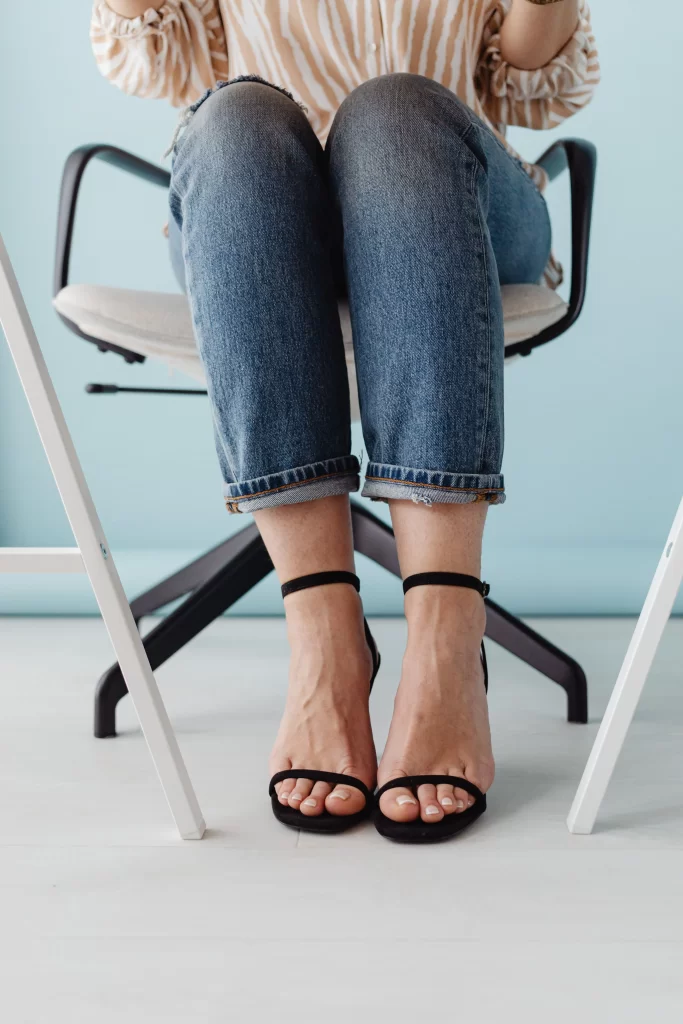
6. Ancient Greek Sandals: Best Minimalist Look, Worst First Week
I want to be honest about this one, because the whole point of actually testing these instead of describing them from a product page is telling you what didn’t work. Ancient Greek Sandals makes a genuinely beautiful thin strap flat sandal, buttery leather, barely there straps, the kind of quiet, expensive looking pair that makes an entire outfit look more put together without trying. I wanted to love these unconditionally.
Instead, the thin leather straps needed real breaking in, and I got a blister on the top of my foot after wearing them for a full day before I’d worn them anywhere shorter first. That’s on me as much as the sandal, I skipped the sensible step of testing them on a short errand first, but it’s exactly the mistake I don’t want you to repeat. Wear these around your apartment or on a quick walk before trusting them for a packed day. Once mine broke in, around the two week mark, they became one of my favorite pairs. They just don’t earn that trust on day one.
7. Open Edit Jamie Block Heel Sandal: Best Neutral That Goes With Everything
If I had to pick the single most versatile sandal I tested, it’s this one. The block heel sits around two inches, low enough that it doesn’t read as a going out shoe, and the strappy construction looks intentional rather than bare. It comes in enough neutral shades, black, tan, white, that building a two pair rotation is simple, and it answers “what goes with literally everything in my closet” better than anything else on this list.
The block heel also solves a real practical problem: it’s genuinely more stable than a thin heel on the kind of uneven sidewalk or subway grate that catches a stiletto every single time.
8. J.Crew Krista Slingback Kitten Heel: Best for Client Meetings and Dressier Days
For the days when the sandal needs to work harder, a pitch meeting, lunch with a client, an actual dressy day at the office, this is the pair I reach for. A kitten heel under two inches gives you the polish of a heel without the compromise, and the slingback strap keeps it secure enough that I never once worried about it slipping off mid stride, which happens more than you’d think with backless styles.
Kitten heels have been having a real moment for a couple of seasons now, and that’s genuinely good news for anyone who wants to look dressed up without the trade offs of a stiletto. This is proof a sandal can stand in for a dress shoe when the day calls for it.
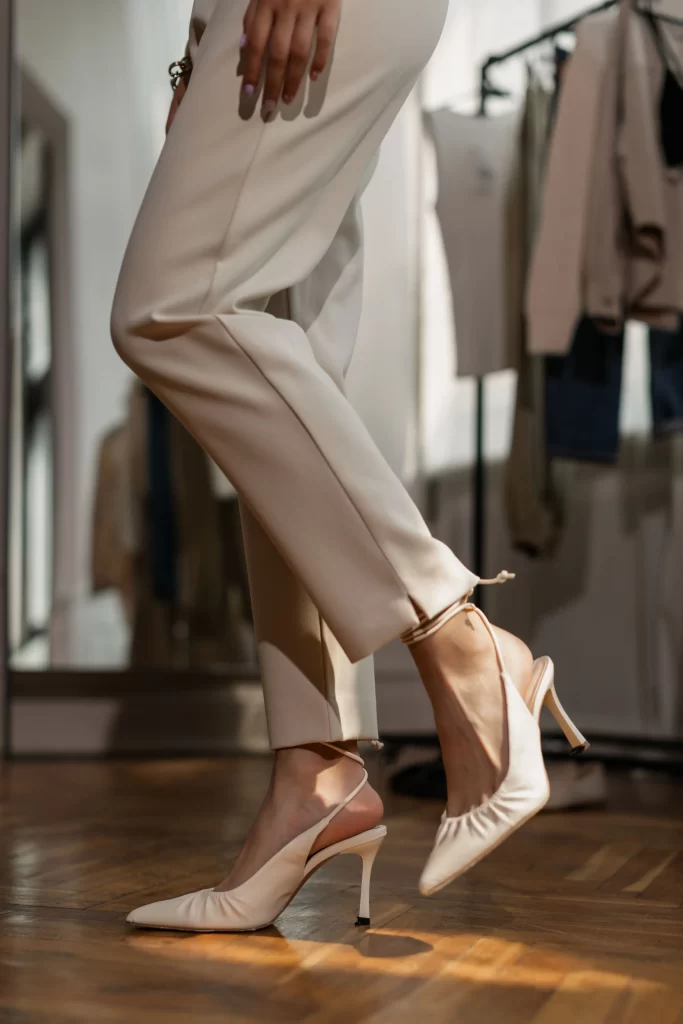
9. Nordstrom Babette Slide Sandal: Best Budget Pick
This is the pair I’d recommend to someone testing whether sandals even work for their office before spending real money on the rest of this list. It’s a simple slide with a cushioned footbed, comfortable enough for a full day with no real adjustment period, and it costs a fraction of almost everything else here.
It won’t do anything fancy and the sole is softer than the sturdier options on this list, so I wouldn’t count on it lasting years of daily wear the way the Birkenstock will. But for the price, it’s an easy first pair if you’re not sure yet how your office will react to sandals at all.
10. Cole Haan ZeroGrand Sandal: Best for Travel Days and Long Walks
Cole Haan built its ZeroGrand technology for dress shoes that needed to feel like sneakers underneath, and it works just as well in sandal form. The sole has real spring to it, noticeably lighter and more cushioned than anything else I tested, which mattered most on the one day I had an early flight for a work trip and needed shoes that could handle an airport, not just a desk.
It’s not the dressiest pair on this list, the sporty sole is more visible than on something like the Krista or the Mayari, but if your job involves more moving around than sitting, standing all day at a trade show booth, site visits, a genuinely long commute, this is the pair built for that specific problem.
How to Style Office Sandals for Work
A sandal reads as intentional or accidental almost entirely based on what’s happening around your ankle. Bare legs with a hem that hits right at the ankle bone tend to look more finished than a longer skirt that half covers the strap, which just looks like the outfit and the shoe didn’t get the memo about each other.
A few combinations that worked all summer: a structured sandal like the Mayari or the Jamie under wide leg trousers, which keeps the whole look grounded even when the trouser hem is loose. A slingback or block heel under a knee length shift dress, since the visible ankle strap does more visual work than a bare foot in a pump would. And on the most casual end still inside most dress codes, a flat slide like the Zuri under a linen blazer and tailored shorts, if your office genuinely allows shorts, which not all do.
Pedicure matters more with sandals than with almost anything else you wear to work. A chipped polish reads more unprofessional than the sandal itself ever will, so if you’re committing to open toe shoes for the summer, budget five minutes a week for upkeep.
Frequently Asked Questions
Are sandals appropriate for the office?
In most business casual workplaces, yes, as long as the sandal is structured, in good condition, and not something you’d wear to the beach. Flip flops and worn out flat slides are the real line, not the open toe itself. If your office runs more conservative or client facing, lean toward a closed heel or a low block heel sandal rather than anything backless.
Is it unprofessional to wear sandals to a job interview?
I’d skip them for the interview specifically, even at a company where sandals are clearly fine once you’re hired. You don’t know the unwritten dress code yet, and an interview is the one day it’s worth defaulting to the safest, most closed option in your closet. Save the sandals for your first week once you’ve actually seen what everyone else wears.
Can I wear sandals with a formal dress?
For anything labeled cocktail or semi formal, a heeled sandal like a slingback or a strappy kitten heel works well and often looks more current than a closed pump. For true black tie, most dress codes still expect a closed toe or at minimum a dressier evening sandal with real embellishment, not your average work pair.
What type of sandals go with everything?
A neutral, low profile sandal in tan, black, or a mid brown leather is the most versatile option, since it disappears into an outfit instead of competing with it. Skip anything with heavy hardware or a bold pattern if you want one pair that pairs with your entire closet, workwear included.
What are the expected sandal trends for 2026?
Kitten heels under about three inches have largely replaced tall heels this year, alongside thick strap and thong silhouettes, minimalist quiet luxury strappy styles, and two tone leather details. For office wear specifically, the kitten heel trend is the most useful one, since it gives you height without sacrificing stability on a long day.
So, Which Pair Should You Actually Buy?
If you only take one thing from ten weeks of testing, it’s this: the sandal that works for your office isn’t the one that looks best in a product photo, it’s the one whose strap doesn’t rub by hour four and whose sole doesn’t look tired by Friday. Start with the Marc Fisher slide or the Birkenstock Mayari if you want the safest, most tested bet, then branch out toward a kitten heel or a wedge once you know what your specific office actually expects.
None of this needs to be complicated. Office sandals are not a loophole you’re getting away with, they’re just shoes that happen to be more comfortable in the heat, and at this point I trust mine more than half the closed shoes still sitting in my closet. If you want a dressier heel on standby for the days sandals do not feel right, I already reviewed the Hotter Donna Shoes and stand by them just as much.