
Here’s a sentence straight from Nivea’s own website: “we’re convinced that animal testing isn’t necessary to prove how effective and skin-compatible our cosmetic products are for you.” That’s a nice sentence. It’s also not the full story, and to Nivea’s credit, they don’t try to hide the rest of it either. If you’re asking is nivea cruelty free, the honest answer is no, and the reason is written right there on their own sustainability page, in plain language, for anyone who scrolls far enough.
That’s actually what makes this one interesting. Nivea isn’t dodging the question the way some brands do. They’re just hoping you stop reading before you hit the caveat.
The Short Answer
No, Nivea is not cruelty free. PETA lists Nivea’s parent company, Beiersdorf, under companies that test on animals, either directly, through suppliers, or through third parties in markets where testing is legally required.
Nivea doesn’t run tests on finished products themselves in most cases. But they sell in mainland China, where regulators have historically required animal testing on imported cosmetics before approval. Selling there, knowing that requirement exists, is enough to disqualify a brand from cruelty free status under every major watchdog’s criteria, including Leaping Bunny and PETA’s Beauty Without Bunnies program.
The EU Banned This. Why Doesn’t That Settle It?
Here’s where a lot of regional cluster questions get answered at once, because a lot of people ask is nivea cruelty free in the uk, in europe, in canada, in australia, assuming the answer might change depending on where they’re shopping.
It’s a fair assumption, and it’s almost right. Cosmetic animal testing has been banned across the EU since 2004, and testing on raw cosmetic ingredients specifically has been banned since 2013. So technically, every cosmetic product legally sold in the EU, Nivea included, is “free from animal testing” in that specific market. Nivea’s own team has pointed this out, while also admitting that just repeating that legal fact would be a little misleading on its own.
Here’s why: a brand’s cruelty free status isn’t graded region by region. It’s graded at the company level, globally. If Nivea sells the same or similar formulations in a market that still requires animal testing, like mainland China, that one market drags the entire brand’s status down everywhere else, including in the UK, across Europe, in Canada, Australia, South Africa, India, and Japan. You can’t be cruelty free in one country and not in another. It’s a company-wide label, not a shipping label.
What Nivea’s Own Policy Actually Admits
Nivea’s transparency page doesn’t try to spin this away, which is honestly a little refreshing after reading through a dozen brand policies that bury the same admission in legal language. Their statement reads, in part, that animal testing is mandated by law in China for the official registration of certain product categories, and that those tests are conducted by state-authorized institutions rather than by Nivea itself.
That distinction matters to Nivea. It doesn’t matter to cruelty free organizations. If a brand knowingly continues selling into a market where that requirement exists, and pays into that system by maintaining distribution there, most cruelty free databases don’t accept “we didn’t personally run the test” as a meaningful separation. The money still funds the outcome.
To their credit, Nivea also says they’re actively working to convince Chinese regulators that animal testing is unnecessary, and that they’ve spent over three decades developing alternative testing methods. That’s a real, ongoing effort. It just hasn’t gotten them off PETA’s list yet.
Is Nivea Owned by a Company That Tests on Animals?
Yes. Nivea is owned by Beiersdorf, the same parent company behind Eucerin, Labello, and Aquaphor. Beiersdorf’s animal testing policy mirrors Nivea’s exactly: no testing except where legally mandated, which functionally means the China exception applies across the whole portfolio, not just the flagship Nivea line.
This is worth knowing if you’re trying to clean up your whole routine rather than swapping one product at a time. Ruling out Nivea alone while still buying Eucerin from the same shelf doesn’t actually change much from an ethics standpoint, since it’s the same corporate policy underneath both labels.
Cruelty Free Status Across Nivea’s Product Lines
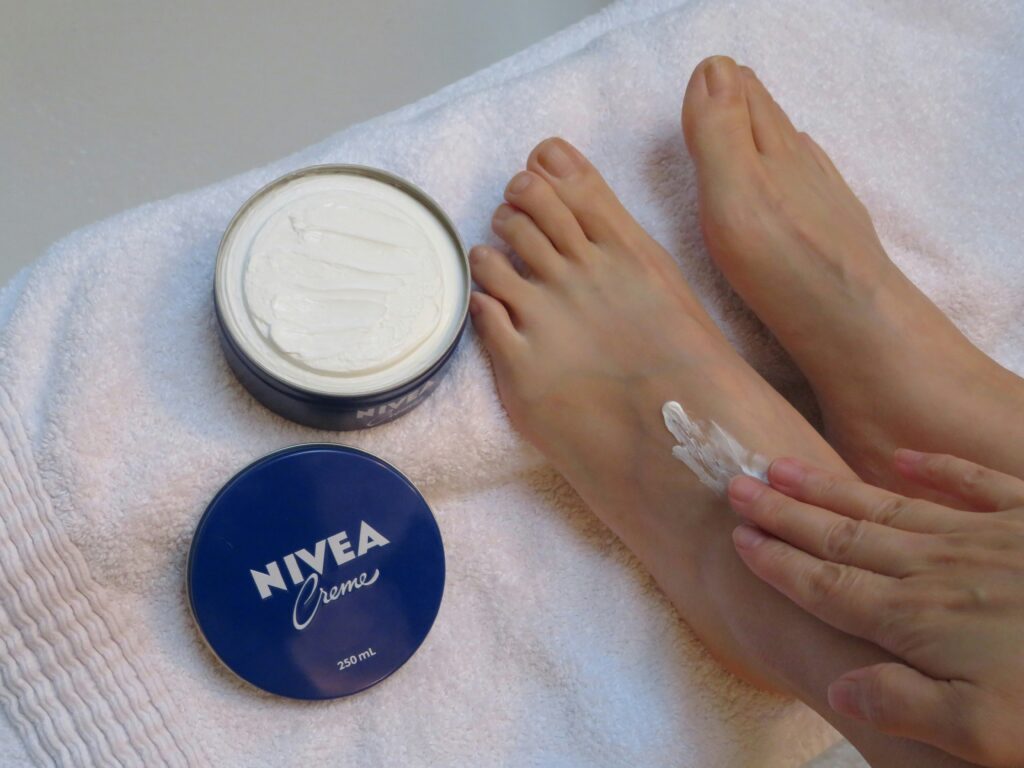
I get asked about specific products constantly: is Nivea Q10 cruelty free, is the deodorant cruelty free, what about the sun cream, the micellar water, the lip balm. The answer stays consistent across all of them, because cruelty free status is assessed at the company level, not the SKU level. Whether you’re holding the classic blue tin, a Q10 night cream, a roll on deodorant, or an SPF sun lotion, none of them get an individual pass just because the formula itself seems gentle or simple.
This applies just as much to the men’s line, the shower gel range, and the hand cream tubes you’ll find at basically every drugstore checkout counter. If the parent brand doesn’t clear the bar, none of the sub-lines do either, regardless of how they’re marketed.
Is Nivea Vegan, at Least?
Not fully, no. Nivea openly states it isn’t a 100% vegan brand and that many of its products contain animal-derived ingredients like beeswax, lanolin, and milk-derived compounds. They do offer a smaller “Naturally Good” range formulated to be free of those ingredients, and they’ve said they’re working to grow that lineup over time.
But cruelty free and vegan are separate labels answering separate questions. Cruelty free is about whether animals were used in testing. Vegan is about whether animal-derived ingredients ended up in the formula. Nivea currently falls short on both counts for most of its lineup, even though the two issues have different root causes.
Cruelty Free Alternatives Worth Switching To
If you’re looking to replace your Nivea staples, the swap is usually easier than people expect. For a rich all-purpose moisturizer to replace the classic tin, certified cruelty free options with similar texture and price points have multiplied over the last few years. For body lotion and shower gel, several drugstore-accessible brands now carry full Leaping Bunny certification, so you’re not stuck choosing between ethics and budget.
If you’re also auditing other drugstore names while you’re at it, our breakdown of Aveeno’s cruelty free status covers a nearly identical China-related loophole, and it’s a common next brand people check once they start down this road.
Will Nivea Ever Actually Go Cruelty Free?
Possibly, but there’s no confirmed date. Chinese cosmetics regulations have loosened somewhat for certain domestically manufactured “general use” products, and Nivea has publicly stated it wants animal testing requirements eliminated internationally. Whether that translates into an actual policy change depends more on Chinese regulatory shifts than anything Nivea alone can control, since they don’t set the law they’re complying with.
Until then, or until Nivea decides the China market isn’t worth the trade off, its status isn’t likely to move.
Frequently Asked Questions
Is Nivea certified cruelty free by PETA or Leaping Bunny?
No. Nivea doesn’t hold certification from either organization, and PETA lists parent company Beiersdorf under its list of companies that test on animals.
Does Nivea test on animals in the UK or Europe specifically?
Not directly, since EU law has banned cosmetic animal testing since 2004. But cruelty free status is evaluated company-wide, so Nivea’s practices in markets like China still affect its overall classification everywhere, UK and EU included.
Is Nivea cruelty free in Australia, Canada, India, or South Africa?
No, for the same reason. A brand’s cruelty free status doesn’t change by country. It reflects the company’s global policy, and that policy includes the China exception regardless of where you’re personally shopping.
Are any specific Nivea products, like Q10 or the deodorant, cruelty free?
No. Cruelty free status applies at the brand level, so no individual product line is treated as an exception, no matter how the formula is marketed.
Is Nivea at least vegan?
No, not as a whole brand. Many products contain beeswax, lanolin, or milk-derived ingredients, though Nivea’s Naturally Good range is formulated without them.
The Bottom Line
Nivea’s honesty here is a little unusual, and it almost makes the situation harder to stay mad about. They’re not hiding the China exception in dense legal text the way some brands do. They’ve written it out plainly, on their own site, along with what looks like a genuine effort to change the underlying regulation. It just hasn’t happened yet, and until it does, the brand stays off every major cruelty free list.
If you’re working through a full routine cleanup, it’s worth checking our take on Laneige’s cruelty free status next, since it runs into almost the exact same regulatory wall.